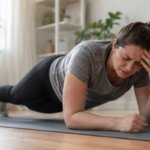
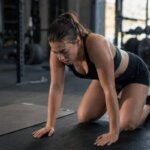
Feel nauseous after planks can be frustrating because the exercise looks simple, but the sick feeling can build fast when your core stays locked under pressure. The real question is whether the nausea comes from breath-holding, stomach compression, holding too long, or a broader core-workout pattern.
1. Feel Nauseous After Planks and the First Pattern to Check
Feeling nauseous after planks is different from feeling sick after a full ab workout because a plank is a static hold. You are not repeatedly folding your stomach like sit-ups or crunches, but you are keeping your abdominal wall braced while your breathing, posture, and stomach pressure all compete at the same time.
The first thing to check is when the nausea starts. If it rises during the hold, especially near the final seconds, the trigger is usually plank-specific pressure, restricted breathing, or a hold that has gone past your current control level.
2. When the Timer Starts Pushing Past Control
The biggest mistake is treating the timer as the goal. A plank that starts clean can turn into a completely different effort once your breathing tightens, your stomach clenches, your shoulders shake, and your body starts fighting to survive the final seconds.
This is where nausea after plank exercise often starts. The useful endpoint is not the longest possible plank; it is the longest plank you can hold while still breathing smoothly. If you feel sick after holding a plank to failure, shorten the hold and build back up from a version that does not trigger the nausea spike.
3. How Core Pressure Can Turn Into Stomach Nausea
Planks can make you feel nauseous because they create steady pressure across the abdominal wall. When your stomach is full, gassy, acidic, or unsettled, that pressure can feel like compression from the inside rather than normal core effort.
If you are wondering why do planks make me nauseous when other exercises feel fine, this pressure difference is the first clue. You feel squeezed, sour, heavy, or queasy while your abs are braced, and the feeling improves after you stop holding the position.
If bracing pressure also makes you sick during heavy lifts, compare Feel Nauseous After Deadlifts: Brace Pressure or Stop Signal?
4. Breathing Clues That Change the Meaning
Breath-holding is one of the most common reasons people feel nauseous doing planks. Many people do not intentionally hold their breath, but they brace hard, tighten their throat, clench their jaw, and stop breathing normally as the hold gets difficult.
Check your breathing before changing everything else. If you become nauseous during planks when the final seconds get hard, the problem may be pressure control rather than the plank itself. Nausea that appears with breath-holding points to pressure control, not just weak abs.
5. When Meal Timing Makes the Sick Feeling Easier to Trigger
Planks are especially sensitive to meal timing because the stomach sits directly under the area being braced. A heavy meal 1–2 hours before training can still feel uncomfortable if you go straight into long planks, and drinking a lot of water right before the hold can create a sloshing, unsettled feeling.
Going completely empty can create a different pattern. If you feel nauseous doing planks after not eating for many hours, especially with shakiness or weakness, the issue may be low fuel rather than stomach compression. The cleanest test is to avoid heavy meals before planks, avoid chugging water, and use a small easy snack earlier if empty-stomach training keeps making you feel sick.
6. When the Pattern Spreads Beyond One Exercise
If planks are the only exercise that makes you nauseous, focus first on hold length, breathing, meal timing, and head position. But if sit-ups, crunches, leg raises, mountain climbers, and other core exercises also create the same sick feeling, the pattern is broader than one static hold.
That difference matters because plank nausea is usually about static pressure and breathing control, while broader ab-workout nausea often involves total volume, repeated compression, intensity, and fatigue across the whole session.
If the sick feeling also appears during other ab moves, compare it with Feel Nauseous After Ab Workout: Core Pressure, Breathing, or Intensity?
7. Position Changes That Can Add Dizziness or Nausea
Some plank nausea is not only from the stomach. Head position, neck tension, and visual focus can make the feeling worse, especially if you drop your head, crane your neck forward, or keep looking around while your body is shaking.
Keep your head in line with your spine and look at one fixed point on the floor. Do not force your neck up to check the mirror or let your head hang down as fatigue builds. If the sick feeling improves when your gaze and neck stay steady, the trigger was not only core pressure.
8. How to Adjust the Hold Without Losing Progress
You do not need to abandon planks just because they made you nauseous once. If you feel sick after planks, change the dose first by using shorter holds, longer rest, an easier variation, or a knee plank until your breathing stays steady from start to finish.
Use this order before trying longer holds again:
- Stop each plank before your breathing locks up.
- Shorten the hold by 30–50% for the next session.
- Try knee planks, incline planks, or elevated hand planks.
- Rest longer between holds instead of stacking fatigue.
- Avoid heavy meals and large drinks before core work.
- End the set if nausea starts climbing instead of testing it again.
9. When the Sick Feeling Is a Stop Signal
Mild nausea that appears during a hard plank and fades after you stop usually points to pressure, breathing, or timing. It should settle when you sit upright, breathe normally, and reduce the next hold instead of repeating the same version again.
Stop the workout if nausea comes with fainting, severe dizziness, chest pain, unusual shortness of breath, confusion, repeated vomiting, severe abdominal pain, or weakness that does not settle. Also stop if easy, short planks keep causing nausea even with better breathing and better meal timing. Repeated nausea from easy planks is not something to push through for discipline.
10. The Bottom Line
Feeling nauseous after planks usually means the hold created more pressure, breath restriction, stomach compression, or duration than your body could control cleanly.
- Nausea near the final seconds often means the hold went past your breathing control.
- Nausea with a squeezed or sour stomach points toward abdominal pressure or meal timing.
- Nausea with lightheadedness may involve head position, neck tension, or visual focus.
- Nausea across many core exercises should be judged as a broader ab-workout pattern.
- Nausea with fainting, chest pain, severe dizziness, repeated vomiting, or severe abdominal pain is a stop signal.