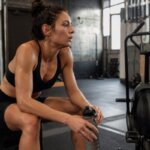
Feel nauseous after mountain climbers can be frustrating because the move looks simple, but the sick feeling can hit fast once your core, breathing, and pace tighten at the same time. The useful judgment is whether the nausea comes from the moving plank position, stomach pressure, breath-holding, rushed knee drives, or a set that is too aggressive for your current control.
1. Feel Nauseous After Mountain Climbers and the Pattern to Notice First
Feel nauseous after mountain climbers is not exactly the same as feeling sick after a normal cardio workout. Mountain climbers put you in a moving plank while your knees drive toward your chest, your abdomen stays braced, and your breathing has to keep up with a fast rhythm. That combination can make your stomach feel squeezed, unsettled, or unstable before the rest of your workout feels extreme.
The first pattern to check is when the nausea starts. If it rises during the mountain climbers themselves, the trigger is usually core pressure, breath-holding, rushed reps, or the way your knees drive into your midsection. If it appears after the full workout, especially with heavy sweating, weakness, overheating, or shaky fatigue, the cause may be broader exercise strain rather than mountain climbers alone.
2. When the Moving Plank Starts Pressuring Your Stomach
Mountain climbers can make you nauseous because the exercise keeps your stomach under pressure while your body is moving quickly. In a plank, your abs are already bracing to hold your body steady. When you add fast knee drives, the front of your body repeatedly tightens, folds slightly, and compresses around the stomach.
This is the key difference from a regular plank or a slower ab workout. The pressure does not just sit there; it keeps changing as your knees drive forward, your hips shift, and your core tries to hold the plank position. If you feel fine during standing exercises but feel sick once the fast knee-drive pattern starts, the problem is more likely the moving plank pressure than your entire fitness level.
If the same pressure appears during crunches or leg raises, compare the pattern with Feel Nauseous After Ab Workout: Core Pressure, Breathing, or Intensity?
3. Why Fast Knee Drives Can Make the Sick Feeling Build
The knee-drive part of mountain climbers matters more than most people expect. Each rep pulls one knee toward the chest while the opposite leg stabilizes, so your core has to brace, rotate slightly, and control your hips at the same time. When the reps get too fast, the movement becomes less like controlled core work and more like repeated stomach compression under fatigue.
This is why some people feel nauseous during mountain climbers even if crunches, leg raises, or slow planks feel manageable. Mountain climbers do not just train the abs; they add speed, shoulder loading, hip flexor effort, and breathing demand. A few controlled reps may feel fine, but a timed set can quickly push your stomach past its tolerance.
A useful test is to slow the exercise down. If slow mountain climbers feel manageable but fast ones make you feel sick, the issue is probably pace plus pressure, not the movement itself. That means the fix is not to avoid mountain climbers forever; it is to reduce speed until your breathing and stomach can stay under control.
4. When Breathing Falls Behind the Exercise
Mountain climbers make it easy to hold your breath without noticing. You may lock your abdomen, tense your shoulders, grip the floor, and rush the knee drives while your breathing becomes shallow. Once breathing falls behind the movement, nausea can rise quickly because your body is working hard while your stomach and diaphragm feel compressed.
The sign is direct: if you cannot breathe steadily during the set, that version is too fast or too hard. This does not mean mountain climbers are bad. It means your current pace is asking for more coordination than your breathing can support.
Try matching the movement to your breath instead of forcing your breath to chase the timer. Slow the knee drives, keep your neck relaxed, avoid clenching your jaw, and stop the set before you start gasping. If nausea improves when your breathing stays smooth, the main trigger was breath control plus pace.
5. When Meal Timing Turns Mountain Climbers Into Nausea
Meal timing can change how mountain climbers feel because the movement happens directly around the stomach area. If you do them too soon after a heavy meal, your stomach may feel full, sour, or squeezed once you start driving your knees forward. Even a large drink right before training can make the movement feel worse because the stomach is already stretched.
The opposite can also happen. If you do mountain climbers near the end of a workout, first thing in the morning, or after going too long without food, nausea may come with shakiness, weakness, sweating, or a sudden need to stop. In that case, the issue may be low fuel combined with a high-effort exercise, not stomach compression alone.
A simple split helps. If your nausea feels heavy, sour, or sloshing, give yourself more time after eating and slow the reps. If it feels weak, shaky, or drained, check whether you trained too long without enough fuel. Mountain climbers punish both extremes because they combine core pressure with fast full-body effort.
6. When the Set Turns Into Too Much Conditioning
Mountain climbers are often used in timed circuits, HIIT workouts, finishers, and warm-up blocks that are not actually easy. The problem is not always the exercise itself. It is often the dose: too many seconds, too little rest, too much speed, and no break before your breathing, shoulders, and core start falling apart.
This pattern is easy to spot. You may feel normal for the first 10–15 seconds, then your hips start bouncing, your shoulders tense up, your knees drive faster, and your breathing turns chaotic. Once form collapses, the exercise stops being controlled conditioning and becomes a pressure spike. If mountain climbers make you nauseous only when the set turns fast and messy, the set length or pace is too high.
If fast floor-based conditioning also makes you sick, compare the pace pattern with Feel Nauseous After Burpees: Head Rush, Stomach Pressure, or Pace
7. When Altitude or Actual Climbing Changes the Meaning
The phrase “mountain climbers” can create confusion because it can refer to the exercise, not outdoor mountain climbing. If you feel nauseous after doing the bodyweight exercise at home or in the gym, judge the plank position, pace, breathing, food timing, and workout intensity first. That is a different situation from feeling nauseous while hiking or climbing at high elevation.
High elevation changes the meaning because nausea may be part of altitude-related illness, especially when it comes with headache, unusual shortness of breath, dizziness, poor coordination, or symptoms that worsen as you go higher. That is not the same as a brief wave of nausea after a hard set of floor exercises. If elevation is involved, do not treat it like ordinary workout nausea.
For normal gym mountain climbers, the better question is whether the sick feeling settles after you stop, breathe, sit upright, and cool down. If it fades quickly and only happens during fast sets, the trigger is usually exercise mechanics. If it keeps worsening or appears in a high-altitude setting, use more caution.
8. How to Adjust the Movement Without Losing the Workout
The next session should be a controlled test, not a repeat of the same sick feeling. Start by slowing the reps and reducing the set length. If nausea drops, you have already found an important clue: your stomach can handle the movement better when pace and pressure stay under control.
Then adjust the position. Put your hands on a bench, step, or sturdy elevated surface so your torso is less horizontal. This reduces abdominal pressure and makes breathing easier while still training the core, shoulders, and conditioning.
Use this order when you test them again:
- Slow the knee drives before adding more reps.
- Keep breathing steady instead of holding your breath through the plank.
- Use an elevated surface if the floor position feels too compressed.
- Avoid doing them right after a heavy meal or a large drink.
- Stop the set while you still have control, not after nausea spikes.
The adjustment is working when your core still feels challenged, but your stomach no longer feels squeezed, sour, or unstable.
9. Warning Signs That Need a Different Response
Most nausea after mountain climbers is easier to judge when it is mild, brief, and clearly linked to fast reps, breath-holding, stomach pressure, or poor timing. It should settle after you stop the set, sit or stand calmly, breathe normally, and let your heart rate come down. That pattern is different from nausea that keeps building after the workout is over.
Stop exercising if nausea comes with fainting, chest pain, severe dizziness, confusion, repeated vomiting, severe headache, unusual shortness of breath, irregular heartbeat, or weakness that does not settle. Also stop if the sick feeling appears suddenly during an easy set that normally feels fine. Those are not signs to push through for discipline.
Pay attention if mountain climbers make you nauseous every time, even when you slow them down, use shorter sets, breathe well, and avoid poor meal timing. That pattern deserves a closer look at reflux, food intake, hydration, blood pressure, medications, heat exposure, and overall training load.
10. The Bottom Line
Feeling nauseous after mountain climbers usually means the moving plank position created too much stomach pressure, breath-holding, fast knee-drive intensity, or poor timing for that set.
- Nausea during the movement often points to core pressure, breathing, or pace.
- Nausea that feels sour, heavy, or squeezed often points to stomach compression.
- Nausea with shakiness or weakness may point to low fuel or workout timing.
- Nausea that improves when you slow the reps usually means the pace was too aggressive.
- Nausea with fainting, chest pain, severe dizziness, confusion, repeated vomiting, or unusual shortness of breath is a stop signal.