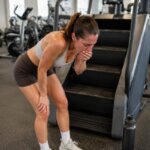
Feel dizzy after StairMaster can feel confusing because the machine may not look as intense as running, but your heart rate, breathing, and leg muscles can climb fast. The key is to judge the timing, the stopping pattern, your breathing, and whether nausea, faintness, or chest symptoms came with it.
1. Feel Dizzy After StairMaster: The Pattern Matters First
Feeling dizzy after StairMaster is not the same as feeling tired after a normal cardio session. The StairMaster keeps your legs working continuously against gravity, so your lower body demands a lot of blood flow while your heart rate and breathing rise quickly. If you step off suddenly, your body may need a few moments to stabilize circulation, balance, and breathing.
The first thing to judge is the timing. Dizziness during the workout often points to intensity, breath control, low fuel, or pushing past your current conditioning. Dizziness right after stepping off often points more toward sudden stopping, blood pressure changes, or not cooling down gradually.
2. When StairMaster Intensity Builds Faster Than You Notice
The StairMaster can make dizziness sneak up because the effort often rises before you fully notice it. Your legs may start burning, your breathing may get shallow, and your heart rate may climb while you are still trying to maintain the same level. By the time you stop, your body may already be behind on oxygen, cooling, and circulation control.
This pattern is more likely if you increase the level too quickly, skip a warm-up, hold the handles tightly, or treat the machine like a test every session. A common sign is feeling okay during the first few minutes, then suddenly feeling lightheaded, hot, weak, or slightly detached near the end. That usually means the intensity passed your current recovery capacity before your mind registered it.
A better judgment point is how quickly the dizziness settles. If it improves within a few minutes after slowing down, breathing normally, and sitting or standing calmly, the session was probably too intense for that day. If the dizziness keeps building after you stop, or you feel close to fainting, that is no longer just a hard cardio feeling.
3. Why Breathing Can Change the Meaning
Breathing is a major clue with StairMaster dizziness. Many people breathe too shallowly when climbing because they are focusing on pace, posture, or the number on the machine. Others hold tension in the ribs, shoulders, jaw, or abdomen without realizing it, especially when trying to stay upright at a higher level.
When breathing is the main trigger, the dizziness often comes with air hunger, chest tightness from exertion, tingling, a rushed feeling, or the need to grip the handles. It may feel like your body is working harder than your lungs can keep up with. In that case, the fix is not only “get fitter.” You also need to lower the level enough that your breathing stays rhythmic.
A practical test is simple: you should be able to maintain controlled breathing without bracing your upper body. If you have to grip, hunch, hold your breath, or gasp to keep the pace, the level is too high for a steady StairMaster session. Drop the level before dizziness appears, not after it has already started.
If breathlessness appears before the dizziness, judge that pattern next with Feel Out of Breath After Climbing Stairs: Poor Fitness, Anxiety, or Warning Sign?
4. When Stopping Suddenly Makes You Lightheaded
A sudden stop is one of the most important StairMaster-specific triggers. While you are climbing, your leg muscles help keep blood moving. When you abruptly step off, that muscle-pumping action drops quickly, but your heart rate may still be high. That shift can make you feel lightheaded, wobbly, or briefly faint.
This is different from being dizzy throughout the workout. If the dizzy feeling appears mainly after stepping down, especially after a hard final minute, the issue may be the transition rather than the entire workout. Your body needed a gradual cool-down, but the machine stopped before your circulation and breathing had time to follow.
Do not finish a hard StairMaster session by stepping off immediately and standing still. Lower the level for 2–5 minutes, let your breathing slow, then step off carefully while holding the rails if needed. This same pattern can happen on a StairMaster, stair climber, or stepmill because the movement keeps your legs working continuously before you step off.
If dizziness mainly hits after stepping off the machine, compare it with Feel Dizzy After Getting Off Treadmill: Motion Adaptation or Warning Sign?
5. Blood Pressure, Blood Sugar, and the Faint Feeling
StairMaster dizziness can also come from blood pressure or blood sugar changes. This is more likely when the feeling is not just “I worked hard,” but more like you need to sit down immediately. You may feel weak, shaky, sweaty, hollow, pale, or close to fainting.
Low fuel is more likely if you trained on an empty stomach, ate very little, worked out longer than planned, or combined the StairMaster with other leg-heavy exercise. The machine can demand a lot from large lower-body muscles, so a session that looks short on paper can still drain you quickly. In that case, dizziness may come with shaky legs or a sudden drop in energy.
Blood pressure-related lightheadedness is more likely when the dizziness spikes after stopping, standing still, or stepping off too fast. If it improves when you sit down, breathe slowly, and let your legs relax, the issue may be a circulation adjustment after hard climbing. If this happens repeatedly even at low intensity, the pattern deserves more attention than a simple “cardio is hard” explanation.
6. Nausea After StairMaster Is a Different Clue
Some people feel nauseous after StairMaster because the machine combines leg-heavy effort, rising body heat, and a sudden stop more aggressively than it first appears. That does not automatically mean something serious happened, but it does change the reading. Nausea usually means the session stressed more than just your balance or breathing.
This is common when the level is too high, the room is hot, you drank too little, or you trained too soon after eating. The StairMaster keeps the lower body under constant demand, so blood flow shifts toward the working muscles while digestion becomes less comfortable. If you also feel hot, weak, or close to vomiting, the workout was too much for that moment.
The key is not to turn this into a general “exercise nausea” article. With StairMaster, nausea matters most when it appears with dizziness, faintness, overheating, or a sudden stop after high effort. If nausea is the main symptom and dizziness is secondary, that becomes a different next judgment.
7. When It Is Normal Enough to Adjust
A mild dizzy feeling after StairMaster can be normal enough to adjust when it has a clear pattern and settles quickly. For example, you pushed the level higher than usual, skipped a cool-down, trained fasted, or kept going after your breathing became rough. If the feeling fades with rest, slow breathing, fluids, and a lower intensity next time, the main issue was probably workload mismatch.
The next workout should be easier, not identical. Start at a lower level, warm up for several minutes, avoid sprint-style climbing, and finish with a gradual cool-down. The StairMaster should feel challenging, but you should still feel coordinated, mentally clear, and able to breathe in a controlled rhythm.
8. Warning Signs That Change the Decision
StairMaster dizziness deserves more caution when it does not behave like a short recovery signal. A brief lightheaded feeling after overdoing the machine is one thing. Dizziness that feels severe, unusual, or connected to stronger symptoms should be treated differently.
Stop the StairMaster session and get medical help if dizziness feels severe, unusual, or comes with:
- Chest pain, pressure, or pain spreading to the arm, jaw, neck, or back
- Fainting or feeling like you are about to pass out
- Severe shortness of breath that does not settle after stopping
- Confusion, trouble speaking, or unusual weakness
- Severe headache, vision changes, or loss of coordination
- Repeated vomiting or symptoms that keep worsening after rest
You should also pay attention if you feel dizzy after StairMaster almost every time, even at a low level. That pattern may involve conditioning, hydration, food timing, blood pressure, medications, anemia, anxiety-like breathing patterns, or another issue that needs a more careful review.
9. How to Change Your Next StairMaster Session
The safest adjustment is to make the next session easier and more controlled. Start with 5 minutes at a level that feels almost too easy, then increase gradually only if your breathing stays steady. Avoid using the last minute as an all-out push until you know your body handles the machine well.
Use the handles for balance, not for pulling your body upward. If you are leaning heavily, gripping hard, or letting your shoulders rise, the level may be too high. That extra tension can make breathing worse and make the dizzy feeling more likely.
End with a real cool-down. Lower the level, keep stepping slowly, let your breathing come down, and then step off carefully. Afterward, stand near the machine for a moment before walking away. If you feel lightheaded, sit down and let your body settle before doing anything else.
The Bottom Line
Feeling dizzy after StairMaster usually means the machine pushed your breathing, blood pressure control, intensity, or fuel level harder than your body handled comfortably that day.
- Dizziness during the workout often points to intensity, breathing, low fuel, or poor pacing.
- Dizziness right after stepping off often points to sudden stopping or blood pressure adjustment.
- Dizziness with nausea often means the session also stressed your stomach, heat control, or hydration.
- Dizziness that improves quickly after rest usually means the next session should be easier and slower.
- Dizziness with chest pain, fainting, severe shortness of breath, confusion, severe headache, or worsening symptoms is a stop-and-get-help situation.