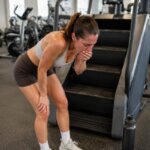
Feel out of breath after climbing stairs can feel strange because the effort is short, but your breathing reacts as if you exercised hard. The key is to judge your recovery time, your usual baseline, and whether shakiness, chest symptoms, dizziness, or sudden decline changes the meaning.
1. Feel Out of Breath After Climbing Stairs and the First Clue
Climbing stairs is not the same as walking on flat ground. Each step lifts your body upward against gravity, so your leg muscles need more oxygen quickly and your heart rate rises faster than it would during an easy walk. That sudden jump in effort is why even people who walk regularly can feel winded after stairs.
This reaction is usually stronger when you climb quickly, carry groceries, skip warm-up movement, sleep poorly, or have been sitting for a long time. Your breathing may feel behind the effort because your body has to switch from rest to high demand almost immediately. That is why getting winded walking up stairs can happen even when flat walking feels easy.
The important point is not whether stairs make you breathe harder. Stairs are supposed to make breathing harder than flat walking. The real question is whether the reaction matches the effort and settles quickly once you stop.
2. Stair Breathlessness and the Normal Pattern
Stair breathlessness is usually less concerning when it happens during the climb, improves soon after stopping, and does not come with chest pressure, faintness, or unusual weakness. If you are out of breath walking up stairs but recover within a minute or two at the top, the pattern usually fits short-burst exertion rather than a warning sign.
This is especially true if the stairs were fast, steep, repeated, or done while carrying something. Many people underestimate stairs because the distance looks short. But one or two flights can still create a quick cardiovascular demand, especially if your recent routine has included more sitting than movement.
A normal pattern should also be predictable. You may feel winded at the top, but the feeling should not suddenly appear after less effort than usual, keep getting worse, or spread into symptoms that feel different from ordinary exertion. Normal stair breathlessness feels like effort, not like your body is failing.
3. Poor Fitness, Deconditioning, and the Stair Pattern
Poor fitness does not always mean you are generally inactive. You may be able to walk around, do errands, or stand for long periods and still feel out of breath after climbing stairs. Stair climbing demands more power from your legs and more rapid oxygen delivery than casual walking, so it exposes conditioning gaps quickly.
This pattern usually feels like heavy breathing, burning thighs, a fast heartbeat, and the need to pause at the top. It is more likely to be deconditioning when your symptoms improve with repeated stair exposure, slower pacing, and regular walking or light cardio over time. The same staircase should gradually feel less dramatic if conditioning is the main issue.
The fitness explanation becomes weaker when breathlessness appears suddenly after stairs that used to feel easy. It also becomes weaker if you feel short of breath during flat walking, light housework, or normal conversation. That shift means the problem is no longer just “stairs are hard”; your baseline may have changed.
4. Anxiety, Breathing Pattern, and Air Hunger
Anxiety can make stair breathlessness feel more alarming than the physical effort alone. You may notice your heart rate jump, then become aware of your breathing, then feel even more short of breath because you are monitoring every sensation. This can create a loop where the original exertion is real, but the panic-like reaction amplifies it.
Breathing pattern matters too. Some people hold their breath while climbing, breathe shallowly, rush the stairs, or tense their shoulders without noticing. By the time they reach the top, the body is dealing with effort plus poor breathing rhythm. That can produce air hunger, chest tightness, shaky legs, or a feeling that you cannot catch a satisfying breath.
This pattern is more likely when symptoms calm fairly quickly after you stop, slow your breathing, and remind yourself that the exertion is over. It is less likely when the breathlessness is new, worsening, or paired with physical red flags. Anxiety can amplify stair breathlessness, but it should not be used to dismiss a clear change in your body.
5. When Feeling Shaky After Climbing Stairs Changes the Pattern
Feel shaky after climbing stairs can fit the same general stair-exertion pattern, but it adds another clue. Shakiness may come from leg muscle fatigue, adrenaline, rushing too quickly, low food intake, or breathing too fast after the climb. If your legs tremble briefly, your heart is racing, and the feeling settles after rest, food, or slower pacing, it often fits temporary exertion stress.
Shaky legs after climbing stairs are especially common when the stairs are steep, you are carrying weight, or you have not trained that movement recently. Your leg muscles may fatigue before your overall stamina feels truly low. In that case, the shakiness is mostly local: your thighs feel weak or trembly, but your thinking, balance, and chest comfort stay normal.
The meaning changes when shakiness comes with dizziness, faintness, chest pressure, severe shortness of breath, confusion, or a feeling that you may collapse. It also deserves more attention if it happens after only a few steps or keeps repeating despite slower pacing and better food or hydration. Out of breath and shaky after stairs is more concerning when the shaky feeling is whole-body, sudden, or paired with faintness.
If stair breathlessness turns into dizziness after exertion, compare it with Feel Dizzy After a Long Walk: Dehydration, Blood Pressure, or a Warning Sign?
6. Warning Signs That Change the Judgment
The strongest warning sign is a change from your normal baseline. If you used to climb the same stairs without much trouble and now feel severely breathless, weak, or shaky after one flight, that change matters more than the number of steps. A new pattern deserves more caution than a familiar one.
Chest pressure, pain spreading to the arm, jaw, neck, back, or shoulder, fainting, bluish lips, severe wheezing, or inability to speak full sentences should not be treated as ordinary stair fatigue. Those symptoms move the situation out of the fitness category. The safer interpretation is that your body is struggling in a way that needs urgent attention.
Other patterns are not always emergencies, but they still deserve a doctor visit. Breathlessness that takes longer than a few minutes to settle, appears during light daily activity, keeps worsening, or comes with palpitations, chronic cough, swelling, unusual fatigue, or repeated dizziness should be checked. The stricter rule is simple: sudden decline, slow recovery, or symptoms beyond breathing should not be ignored.
7. How to Judge It After You Stop Climbing
What happens after you stop climbing often tells you more than what happens during the stairs. If your breathing slows within 30 to 90 seconds and you feel basically normal again, the pattern leans toward ordinary exertion, pacing, or conditioning. If you need several minutes to recover every time, the signal is stronger.
Compare the symptom to your own history, not someone else’s fitness level. One person may get winded after stairs because they sprinted up them; another may get winded because their usual capacity has dropped. Your previous baseline is the reference point.
Use this split after you stop:
- Quick recovery: breathing settles within 30 to 90 seconds and you feel normal again.
- Conditioning pattern: the same stairs feel easier with slower pacing and gradual practice.
- Anxiety or breathing-pattern pattern: symptoms spike with tension, shallow breathing, or fear of the sensation.
- Check-it pattern: breathlessness is new, worsening, slow to recover, or paired with dizziness, chest pressure, faintness, wheezing, or unusual shakiness.
8. What to Do Next Based on Your Pattern
If the pattern seems normal, slow the climb and let your breathing match the effort. Try using the handrail lightly, taking one flight at a time, and avoiding the habit of rushing stairs as if they should feel easy. You are not trying to avoid effort; you are testing whether your body responds predictably.
If poor conditioning fits, build the stair demand gradually. Walking more often, adding short hill or stair exposure, and allowing full recovery can help your body adapt. The useful sign is not that stairs become effortless right away, but that the same staircase feels less dramatic over time.
If anxiety or breathing pattern fits, notice whether you hold your breath, tense your shoulders, or panic when your heart rate rises. Slowing down before the top of the stairs can prevent the sudden air hunger feeling. If the same stairs keep feeling worse despite slower pacing, food, hydration, and repeated gentle exposure, stop treating it as a simple habit issue.
If breathlessness shifts into whole-body shaking, judge the workout-recovery signal separately: Feel Shaky After Exercise: Blood Sugar, Adrenaline, or a Sign to Stop?
9. Final Takeaway
Feeling out of breath after climbing stairs is usually judged by recovery, baseline change, shakiness, and accompanying symptoms rather than by the stairs alone.
- If it happens during the climb and settles quickly, it often fits normal exertion.
- If it improves with slower pacing and gradual practice, poor conditioning is more likely.
- If it comes with shaky legs but clears quickly, exertion, adrenaline, or muscle fatigue may fit.
- If it is sudden, worsening, slow to recover, or paired with chest pressure, faintness, severe dizziness, wheezing, or whole-body weakness, get medical advice.