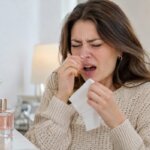
If you’ve wondered why perfume makes you sneeze whenever someone sprays it nearby, the cause may be nasal irritation rather than an allergy. Whether your eyes itch, how quickly the sneezing starts, and when it stops can help you recognize what’s more likely happening.
1. Why Do You Start Sneezing Right After Smelling Perfume?
If someone sprays perfume nearby and you immediately start sneezing, it can be frustrating, especially when you cannot avoid the smell. Repeated sneezing does not automatically mean you are allergic, and a few details about your reaction can help explain why your nose responds this way.
Notice whether sneezing begins within seconds, whether your nose or eyes itch, and how quickly you recover after leaving the scented area. Symptoms that continue without perfume exposure, occur around common allergens, or involve breathing difficulties deserve closer attention.
2. How Can You Recognize Fragrance-Triggered Nonallergic Rhinitis?
Perfume can make you sneeze simply by irritating nerves inside your nose, while repeated sneezing with a runny or stuffy nose may be part of nonallergic rhinitis. This reaction can occur without an allergic immune response, especially when strong smells stimulate a sensitive nasal lining.
If a coworker’s cologne makes you sneeze in an elevator, notice whether the sneezing stops after you step outside. This explanation becomes more likely if smoke, air fresheners, scented candles, and other strong smells also make you sneeze, even when your eyes and nose rarely itch.
3. When Could Perfume-Related Sneezing Involve an Allergy?
Allergic rhinitis becomes more likely when sneezing comes with itchy eyes and an itchy nose, especially if similar symptoms occur around pollen, dust mites, or pets. When perfume makes your nose run and your eyes itch, consider whether an existing allergy could be making your nose more sensitive to strong fragrances rather than assuming the perfume itself is an allergen.
A true allergy to fragrance ingredients more commonly causes itchy skin, redness, or eczema after direct contact, sometimes appearing hours or days later. Sneezing alone cannot confirm a perfume allergy, and allergy testing for airborne triggers differs from the patch testing used to investigate fragrance-related contact dermatitis.
4. What Does the Timing of Your Sneezing Tell You?
Do you stop sneezing as soon as you leave the room, or does it continue after the smell is gone? Sneezing that stops after leaving the room, particularly when it starts immediately after exposure and occurs without much itching, supports nasal irritation, although timing alone cannot confirm the cause.
Some people sneeze around nearly every perfume, while others react only when someone sprays a particularly strong fragrance nearby. If sneezing continues long after exposure, appears without noticeable fragrance, or regularly accompanies itchy eyes and congestion, keep track of those patterns for a week or two because another nasal condition may be contributing.
5. What Can You Do to Stop Sneezing Around Perfume?
Start by reducing how much fragrance reaches your nose, especially if you sneeze whenever someone sprays perfume nearby. Move away from concentrated scents, improve ventilation, avoid spraying perfume near your face, and choose fragrance-free everyday products when possible.
Solid perfumes, perfume oils, and natural fragrances are not guaranteed to prevent sneezing because they can still release irritating scent compounds. A saline nasal spray may help soothe irritation, but if symptoms continue despite reducing exposure, ask a healthcare professional whether a treatment such as a nasal antihistamine would be appropriate.
6. When Should You See a Doctor About Sneezing After Perfume?
Occasional sneezing that disappears shortly after leaving a scented environment is generally less concerning than frequent symptoms that interfere with sleep or daily activities. If you develop ongoing congestion, repeated sneezing without an obvious trigger, or symptoms around pollen and pets, your doctor can assess whether allergic rhinitis, nonallergic rhinitis, or another nasal condition is responsible.
Perfume-related wheezing, chest tightness, or shortness of breath deserves prompt medical assessment because fragrances can trigger respiratory symptoms in susceptible people. Sudden throat or tongue swelling, severe difficulty breathing, or faintness requires emergency medical care.
7. What Matters Most
- Sneezing immediately after smelling perfume often suggests nasal irritation or fragrance-triggered nonallergic rhinitis rather than a true fragrance allergy.
- Itchy eyes, an itchy nose, and reactions around pollen or dust make an underlying allergic condition more likely, although both conditions can occur together.
- An itchy rash after perfume touches your skin may indicate allergic contact dermatitis, which differs from fragrance-triggered sneezing.
- Sneezing that improves soon after leaving a scented area supports an exposure-related reaction, but the timing alone cannot confirm the cause.
- Reducing fragrance exposure is the best starting point, while persistent nasal symptoms, breathing difficulties, or severe allergic symptoms require appropriate medical attention.