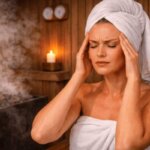
Feel sick after smelling perfume can feel confusing because the reaction may happen quickly, even when the scent is not touching your skin. The key is to judge whether it was a one-time strong-smell reaction, a repeated fragrance sensitivity pattern, a migraine-type trigger, or a stronger warning sign.
1. Feel Sick After Smelling Perfume: What Your Body May Be Reacting To
Perfume is not just “a smell” to your body. It is a concentrated mix of scent compounds, alcohol, and other ingredients that can irritate the nose, throat, and nervous system when the scent is strong enough. For some people, that irritation feels like a stuffy nose or throat tickle, but for others it shows up as nausea, dizziness, headache, or a sick feeling in the stomach.
This does not always mean you are allergic to perfume. A true allergy is more likely when there are immune-type symptoms such as rash, swelling, hives, wheezing, or a clear skin or breathing reaction. Feeling nauseous after smelling perfume is often closer to fragrance sensitivity, smell-triggered nausea, sensory overload, or a migraine-related response.
The first thing to notice is the pattern. If you felt sick once after walking through a heavy cloud of perfume, that can be a normal strong-scent reaction. If it happens repeatedly with perfume, scented candles, air fresheners, laundry products, or cleaning sprays, your body is showing a stronger sensitivity pattern that deserves more attention.
2. When Perfume Makes You Nauseous Instead of Just Annoyed
A strong scent can make your stomach feel unsettled because smell and nausea are closely connected. The smell pathway links with brain areas involved in memory, emotion, and body responses, which is why a scent can make someone feel sick before they fully understand what triggered it. This is also why searches like “perfume makes me nauseous” and “why does perfume make me feel sick” often point to the same basic judgment: scent exposure is triggering a body response, not just a personal dislike.
The reaction is more likely to stay in the “sensitivity” range when the nausea starts soon after exposure, improves after fresh air, and does not come with swelling, severe breathing trouble, chest pain, or fainting. It may feel dramatic in the moment, but the pattern is usually clearer than the intensity: perfume smell comes in, nausea rises, distance or fresh air helps, and the body settles.
The reaction is more concerning when nausea keeps happening in many scented places or lasts long after you leave the source. That does not automatically mean something dangerous is happening, but it means the issue is not just “I dislike perfume.” It may be a repeated fragrance sensitivity, migraine trigger, or broader smell sensitivity that needs better avoidance and tracking.
3. When Perfume Smell Causes Dizziness Too
Feel dizzy after smelling perfume fits into the same judgment path because the trigger is the same: fragrance exposure. The symptom changes from nausea to dizziness, but the real question is whether the dizziness feels like lightheadedness, migraine-like head pressure, sensory overload, or a stronger reaction that affects breathing or balance.
Mild dizziness with nausea, headache, or a foggy feeling after a strong scent often points toward a sensory or migraine-type response. Some people do not get a classic migraine headache every time. They may feel nauseous, dizzy, sensitive to light or sound, or mentally foggy after a smell trigger, especially if they were already tired, stressed, dehydrated, hungry, or in a crowded indoor space.
Dizziness after perfume smell matters more than nausea alone when it feels severe, comes with near-fainting, chest tightness, trouble breathing, throat swelling, confusion, or weakness on one side. In that case, do not treat it as simple perfume sensitivity. Leave the area, sit down, and get medical help if the symptoms are intense or do not settle.
4. Fragrance Sensitivity, Migraine Trigger, or Airway Irritation?
Fragrance sensitivity usually feels like a repeated body reaction to scented products. The common pattern is nausea, headache, dizziness, throat irritation, coughing, watery eyes, or a heavy feeling in the head after perfume, cologne, air freshener, scented lotion, or laundry fragrance. A migraine-related trigger may feel more specific: head pressure, one-sided headache, nausea, light sensitivity, sound sensitivity, or a need to lie down after smelling perfume.
Airway irritation is more likely when the scent makes your nose burn, your throat feel scratchy, your chest feel tight, or your breathing feel uncomfortable. That can happen from strong fragrance exposure even without a true allergy. The line changes when breathing becomes difficult, your throat feels like it is closing, or you develop swelling or wheezing. Those symptoms should not be brushed off as ordinary smell sensitivity.
5. Why Some Perfumes Hit Harder Than Others
Not every perfume affects the body the same way. Heavy musk, sweet vanilla, floral notes, powdery scents, alcohol-heavy sprays, and strong synthetic-smelling fragrances can feel more intense in enclosed spaces. One spray across a room may be tolerable, while a freshly sprayed elevator, office, car, salon, or store aisle can make perfume smell feel overwhelming fast.
Your body state also changes the reaction. Perfume may make you feel more sick when you are tired, hungry, dehydrated, anxious, already dealing with a headache, or recovering from poor sleep. If the same perfume or same type of scent keeps causing nausea, dizziness, headache, or throat irritation, treat it as a real trigger. You do not need to prove that the scent is “objectively strong” for the reaction to matter.
If scented store aisles leave you drained beyond nausea, check Feel Overstimulated After Shopping: Sensory Load or Anxiety? as the next sensory-load pattern.
6. What to Do Right After a Perfume Reaction
First, move away from the scent source. Fresh air is usually more useful than trying to push through the reaction, because staying in the same scented room keeps the trigger active. If the perfume is on your skin, wash that area with soap and water instead of covering it with another scented product.
Sit down if you feel dizzy. Sip water slowly if your stomach feels unsettled, and avoid adding more stimulation such as strong coffee, alcohol, intense exercise, or another scented product right away. Use a simple note afterward: what scent it was, where it happened, how fast symptoms started, and how long they lasted.
For dizziness in scented stores, compare this pattern with Feel Dizzy in Grocery Store: Sensory Overload, Anxiety, or Blood Sugar?
7. When It Is More Than Normal Smell Sensitivity
A one-time sick feeling after a strong perfume cloud is usually not the same as a serious medical problem. The reaction becomes more important when it repeats, spreads to many scented products, interrupts work or daily life, or comes with migraine-like symptoms that last for hours. At that point, avoidance alone may not be enough; you may need to identify patterns more carefully.
You should take it more seriously if perfume smell causes strong dizziness, faintness, chest tightness, wheezing, throat swelling, trouble swallowing, severe headache, or symptoms that do not improve after leaving the area. Those are not symptoms to explain away as being too sensitive. For recurring but non-emergency reactions, choose fragrance-free products when possible and discuss the pattern with a clinician if headaches, dizziness, or breathing symptoms keep happening.
8. Final Takeaway
Feeling sick or dizzy after smelling perfume is usually a reaction to fragrance exposure, but the meaning depends on repetition, symptom type, and how quickly your body settles after leaving the scent.
- One strong perfume exposure with quick recovery is usually a strong-scent reaction.
- Repeated nausea, dizziness, or headache from scented products points more toward fragrance sensitivity or a migraine-type trigger.
- Throat swelling, chest pain, breathing trouble, fainting, or severe lightheadedness should be treated as a warning sign, not ordinary smell sensitivity.