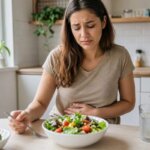
Salad gives me diarrhea can feel confusing because the meal seems light, clean, and healthy. The real issue is whether your reaction points to timing, raw fiber, dressing, IBS-style sensitivity, or a food-safety problem.
1. Start With the Timing of Your Salad Diarrhea
If salad sends you to the bathroom quickly, timing matters more than the lettuce itself. A reaction within 30 to 60 minutes often points to a fast gut reflex, raw-fiber load, cold food volume, or a sensitive bowel pattern.
Diarrhea that starts several hours later or the next day deserves a different judgment. If it comes with fever, vomiting, chills, severe cramps, or other people getting sick after the same salad, food safety becomes a bigger concern.
2. Watch What Happens With Large Raw Salads
A large raw salad can move through your gut faster than expected because many salad ingredients are bulky, cold, and high in insoluble fiber. If raw vegetables give me diarrhea is your repeated pattern, the issue may be raw-fiber load rather than lettuce alone.
This is especially common after suddenly eating more vegetables or switching from low-fiber meals to large salads. If a small side salad is fine but a large dinner salad causes loose stool, cramps, or urgency, portion size and raw texture are likely part of the trigger.
If large raw salads feel too bulky, compare liquid fiber load next: Green Smoothie Gives Me Diarrhea? Check the One-Glass Load
3. Separate Lettuce From the Add-Ins
When lettuce gives you diarrhea, lettuce may not actually be the strongest trigger. Raw onion, garlic, beans, chickpeas, cabbage, cauliflower, apples, dried fruit, and sweet toppings can ferment more strongly or pull more water into the bowel.
This matters most if salad also causes bloating, gas, cramps, and urgent bowel movements. Before deciding your stomach cannot handle salad, try mild greens without onion, beans, cabbage, creamy dressing, dried fruit, or sweet toppings, then add one ingredient back at a time.
If chickpeas are the suspicious add-in, narrow the pain pattern next: Stomach Pain After Eating Chickpeas? Fiber, FODMAP, or Warning Sign
4. Check the Dressing Before Blaming the Greens
Salad dressing gives some people diarrhea because it can add fat, dairy, garlic, onion, acidity, gums, or sweeteners. Ranch dressing diarrhea, Caesar salad diarrhea, and creamy dressing diarrhea often come from the dressing rather than the vegetables.
Creamy dressings may trigger diarrhea if lactose, high fat, or rich dairy speeds up your gut, while oil-heavy dressings can loosen stool when paired with cheese, avocado, nuts, bacon, fried toppings, or a large portion of oil. Keep the greens simple, use a small amount of plain dressing, and compare that with your usual creamy, oily, or restaurant dressing on a separate day.
5. Notice When It Looks More Like IBS Sensitivity
Salad can trigger IBS because it combines several common irritants in one meal. Raw fiber, cold volume, high-FODMAP add-ins, fatty dressing, stress, and a strong gastrocolic reflex can all push the bowel toward urgency.
This pattern usually feels repeatable rather than random. If salad makes me poop immediately more often during stress, after coffee, after large meals, or when you eat quickly, the reaction may be tied to bowel sensitivity instead of one unsafe salad.
6. Know When Salad Diarrhea Could Be Food Poisoning
Food poisoning from salad becomes more likely when diarrhea is watery, repeated, intense, or paired with vomiting, fever, chills, or severe abdominal cramps. Bagged salad diarrhea, prepackaged salad diarrhea, and restaurant salad diarrhea deserve extra caution because raw produce is eaten without a cooking step.
Do not treat bloody diarrhea, black stool, severe pain, dizziness, very low urination, high fever, or symptoms that keep worsening as a normal salad reaction. Get medical help if diarrhea is severe, lasts more than two days, causes dehydration signs, or comes with repeated vomiting or blood.
7. Bottom Line
- Fast diarrhea after salad usually points first to gut reflex, raw-fiber load, portion size, dressing, or IBS-style sensitivity.
- Delayed watery diarrhea with fever, vomiting, severe cramps, or shared illness points more toward food-safety risk.
- Lettuce is not always the trigger; onion, beans, cabbage, creamy dressing, fat, and sweet toppings often matter more.
- A smaller, simpler salad is the cleanest test before deciding your stomach cannot handle salad.
- Get medical help if diarrhea is bloody, severe, dehydrating, prolonged, or paired with high fever or repeated vomiting.