Feel nauseous after fluorescent lights can feel oddly specific, especially when you feel fine outside but sick in an office, store, classroom, or clinic. The useful judgment is whether the nausea follows timing, visual strain, sensory load, or a repeat pattern that needs a closer check.
1. Start With the Timing Pattern First
The first clue is when the sick feeling starts. If you feel normal before entering the room, then feel nauseous after 10–30 minutes under fluorescent lighting, the trigger is more likely the visual environment than random stomach trouble.
This matters because fluorescent-light nausea often behaves differently from food nausea. It may come with eye pressure, forehead tension, brain fog, irritability, or a strong need to leave the room, and the pattern becomes more obvious if the nausea fades after stepping outside, sitting in softer light, or looking away from reflective surfaces.
2. When Flicker Makes the Room Harder to Tolerate
Some fluorescent lights create a subtle flicker that you may not consciously see. Your eyes still have to process that unstable input, especially when the light comes from overhead tubes, bounces off white walls, or reflects from screens and glossy floors.
This pattern often feels like nausea from fluorescent lights rather than classic motion sickness. You may feel a slow wave of sickness, a tight forehead, or a “my brain wants out of this room” feeling, which is why people often search “why do fluorescent lights make me nauseous” even when the problem feels more visual than digestive.
3. When Eye Strain Starts Turning Into Nausea
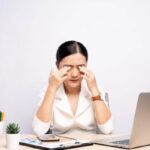
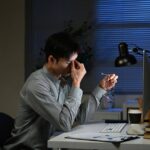
Eye strain under fluorescent lights often appears before the stomach feeling becomes obvious. Your eyes may feel dry, pressured, tired, or slow to focus, and screens may feel harder to look at when overhead fluorescent lights are on.
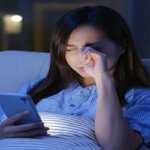
The nausea usually builds when your eyes keep fighting the same visual stress. A laptop, phone, white desk, bright shelves, and overhead lighting can stack together, so dry eyes, blurry focus, or forehead pressure point toward eye strain as the first cause to test.
4. When Sensory Overload Changes the Sick Feeling
Fluorescent lights can feel worse in visually busy places. Grocery stores, large offices, clinics, classrooms, and big retail spaces add shelves, signs, people, movement, reflections, polished floors, and screen glare, so the light is only one part of the load.
This is why searches like “fluorescent lights make me feel sick” and “office lights make me nauseous” often describe more than brightness. If you feel better in a quiet room with softer light, the problem is more likely sensory overload than a stomach issue by itself.
If visual overload later turns into fatigue after driving, compare this next pattern: Feel Tired After Driving: Normal Fatigue or Unsafe Drowsiness?
5. When Nausea Comes With Unsteady Visual Input
Sometimes the main feeling is nausea, but the room also feels visually unstable. You may not feel fully dizzy, yet the space feels too bright, too busy, or hard to settle into, which means your eyes, balance system, and nervous system may all be involved.
The key is to keep the main judgment separate. If the strongest symptom is nausea, focus on sick feeling, visual strain, and sensory overload; if the stronger symptom becomes lightheadedness, unsteadiness, or feeling visually pulled, the next decision path is dizziness rather than nausea.
If nausea also makes you feel unsteady or visually pulled, read Feel Dizzy After Fluorescent Lights: Flicker or Eye Strain? next.
6. What to Try When the Sick Feeling Starts
The first move is to reduce visual load quickly. Step away from the fluorescent area, look at a matte surface or distant object, lower screen brightness, sit away from direct overhead tubes, or move closer to natural light if possible.
Then check whether the nausea changes within a few minutes. If it drops after leaving the light, changing seats, using softer task lighting, or reducing screen glare, you have a clear environmental clue; if it continues the same way in softer light, check other factors such as skipped meals, dehydration, poor sleep, migraine tendency, or a broader light-sensitivity pattern.
7. When the Pattern Deserves a Closer Check
A mild, repeatable sick feeling that appears under fluorescent lights and improves after leaving usually points toward flicker sensitivity, eye strain, or sensory overload. That pattern is still worth taking seriously, but it gives you a practical first step: change the lighting exposure and watch the recovery pattern.
A stronger pattern needs more caution. Get checked if fluorescent lighting repeatedly causes intense nausea, severe headache, balance trouble, visual disturbance, fainting, chest pain, one-sided weakness, trouble speaking, or symptoms that do not improve after leaving the light. Fast, severe, repeated, or disabling symptoms should not be treated as ordinary light sensitivity.
If this pattern resembles photophobia or a migraine-like response, repeated episodes are worth discussing with an eye doctor or clinician.
8. Key Takeaway
Feeling nauseous around fluorescent lights usually means your eyes, brain, or nervous system is reacting to a harsh visual environment.
- If nausea starts after time under the lights, judge the exposure pattern first.
- If it comes with dry eyes, blurry focus, or forehead pressure, start with eye strain.
- If busy stores or offices make it worse, sensory overload is more likely.
- If it improves after leaving the light, the environment is a strong clue.
- If nausea is intense, repeated, or paired with neurological symptoms, get checked.