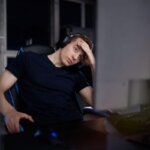
Feel dizzy after movie theater can feel strange because you were sitting still, but your body may react as if it just came out of motion, darkness, loud sound, and bright visual stimulation. The useful judgment is whether the dizziness came from big-screen motion, theater sound, light transition, seat position, or a pattern that should not be treated as a normal theater reaction.
1. Feel Dizzy After Movie Theater: What the First Clue Suggests
Dizziness after a movie theater visit should be judged by what felt wrong first. If the dizziness started during fast camera movement, chase scenes, 3D effects, IMAX scenes, or wide-screen motion, the main trigger is usually visual-motion mismatch. Your eyes were taking in large moving images, but your inner ear and body were still sitting in the seat.
This is different from ordinary screen fatigue because a theater screen fills more of your visual field. The room is dark, your body is still, the sound is intense, and your eyes have fewer stable reference points around the screen. That combination can make your brain work harder to decide whether you are moving, sitting still, or reacting to the environment.
The first split is simple. Dizziness during action scenes points more toward screen motion. Dizziness after leaving the theater points more toward sensory readjustment. Dizziness with headache, nausea, or light sensitivity points more toward overstimulation rather than only motion sickness.
2. When Big-Screen Motion Makes You Feel Off
Movie theater motion sickness is most likely when the dizziness appears during scenes with fast panning, handheld camera movement, racing, flying, spinning, shaky action, or quick scene cuts. Your eyes receive strong motion cues from a screen that takes up much of your vision, but your body does not feel matching movement. That mismatch can leave you dizzy, nauseous, lightheaded, or slightly unreal when the movie ends.
This is why the same movie may feel fine on a phone or TV but uncomfortable in a theater. A small screen leaves your room, wall, desk, or couch in your peripheral vision, so your brain still has stable real-world references. In a theater, the screen can dominate your field of view, especially if you sit close to the front or watch a large-format movie. Unlike VR or video games, a movie theater also gives you less control over the motion because you cannot slow the camera down, change the field of view, or pause the movement before your body reacts.
The strongest clue is timing. If the dizziness rises during movement-heavy scenes and eases when the camera slows down, the issue is probably visual motion sensitivity. If the dizziness only appears after standing up, walking into the lobby, or stepping outside, the theater environment and transition may be just as important as the movie itself.
If large moving visuals bother you beyond theaters, Feel Dizzy After VR: Motion Sickness, Inner Ear, or Headset Settings?
3. When IMAX, 3D, or Front-Row Seats Change the Reaction
IMAX, 3D, and front-row seats can make movie-related dizziness easier to trigger because they increase visual immersion. The closer you sit, the more your eyes have to follow motion across a wide area. With 3D, your eyes also have to process depth effects that may not match how your body normally judges distance and movement.
This does not mean IMAX or 3D is bad. It means those formats leave less room for your brain to ignore the illusion. If you feel dizzy after 3D movies, large-format screens, or seats near the front, the problem may not be the whole movie theater experience. It may be that the visual field was too large or too immersive for your current tolerance.
Seat position is one of the easiest clues to test next time. If sitting farther back and near the center makes the same type of movie easier to handle, the trigger was likely visual scale and peripheral motion. If dizziness still happens even from a stable seat during a calm movie, look more closely at light sensitivity, sound sensitivity, migraine tendency, or general balance sensitivity.
4. When Loud Sound and Bass Add to the Dizziness
Some movie theater dizziness is not only visual. Loud sound, deep bass, sudden volume changes, and vibration through the seat can make your body feel more alert, tense, or unsettled. In that case, the dizziness may come with a tight chest, jaw tension, headache, nausea, or a wired feeling rather than a pure spinning sensation.
Sound can also make visual dizziness feel stronger. A fast action scene with camera movement is one trigger. The same scene with loud explosions, heavy bass, and flashing lights is a bigger sensory load. Your brain is not processing one stimulus at a time; it is processing motion, brightness changes, vibration, sound pressure, and emotional intensity together.
The clue is whether quieter scenes feel easier even when the screen is still large. If dizziness gets worse during loud trailers, action scenes, jump scares, concerts, or explosion-heavy sequences, sound sensitivity is part of the pattern. If you leave the theater feeling overstimulated rather than simply motion sick, the next step is reducing total sensory load, not only avoiding fast camera movement.
5. When Light Changes After the Movie Matter
Feeling dizzy after leaving the movie theater often comes from the transition, not just the movie itself. Your eyes adjust to a dark theater for a long time, then suddenly face a bright lobby, phone screen, parking lot, sunlight, or fluorescent lighting. That shift can make your head feel strange for a few minutes, especially if the movie was visually intense.
This is why some people feel weird or disoriented after a movie theater visit, even if they were not dizzy during the movie itself. It may be stronger if you stand up quickly, check your phone immediately, walk into bright light, or leave a crowded theater while your eyes and balance system are still readjusting. The body is not only recovering from the movie; it is switching environments.
The judgment point is recovery. If the feeling fades after sitting, walking slowly, drinking water, and giving your eyes a few minutes, it fits sensory readjustment. If bright stores, fluorescent lights, or busy indoor spaces also make you dizzy, the theater may be exposing a broader light or sensory sensitivity pattern.
6. When Nausea, Headache, or Vertigo Changes the Meaning
Dizziness after a movie theater visit is usually less concerning when it is mild, predictable, tied to intense scenes, and improves after you leave the environment. It deserves more attention when it feels like true spinning vertigo, causes repeated vomiting, comes with a severe headache, affects walking, or continues long after the movie should have stopped affecting you.
The symptom order matters. Nausea during fast motion points more toward visually induced motion sickness. Headache with light sensitivity points more toward migraine-like sensitivity or visual overstimulation. Spinning when you turn your head, trouble walking, faintness, weakness, confusion, or new vision changes should not be dismissed as normal movie theater dizziness.
A practical rule is to separate “triggered and fading” from “severe or continuing.” If the dizziness clearly follows a movie trigger and settles with rest, you can adjust your next theater visit. If the dizziness is severe, unusual for you, persistent, or paired with neurological, balance, vision, chest, or repeated vomiting symptoms, stop treating it as a simple theater reaction and get proper medical advice.
7. What to Change Before Your Next Movie
Start with the theater setup. Choose a seat farther back and near the center, avoid the front rows, skip 3D or IMAX if those formats triggered symptoms before, and avoid checking your phone immediately after the movie. Let your eyes readjust to the room before standing up quickly or walking into bright light.
During the movie, reduce the trigger instead of forcing through it. Look away briefly during shaky camera scenes, close your eyes for a few seconds during intense motion, keep your body still but relaxed, and avoid caffeine-heavy or empty-stomach theater visits if those make you feel more reactive. After the movie, give your system a short reset by sitting for a moment, walking slowly, drinking water, and avoiding another screen until the dizziness clearly fades.
If games trigger the same nausea, Feel Sick After Playing Video Games: Motion Sickness or Visual Overload?
8. The Bottom Line
Feeling dizzy after a movie theater visit usually means the big screen, sound, darkness, light transition, or immersive format exceeded your current sensory tolerance.
- Dizziness during fast camera movement points more toward visual-motion mismatch.
- Dizziness after leaving the theater points more toward sensory readjustment.
- Dizziness after IMAX, 3D, or front-row seats points more toward visual immersion.
- Dizziness with loud sound, bass, or flashing scenes points more toward sensory overload.
- Severe, persistent, unusual, or balance-disrupting dizziness needs more attention.