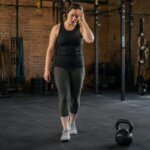
Feel nauseous after kettlebell swings can feel confusing because the set may be short, but your stomach suddenly reacts like you pushed too far. The real judgment is whether the trigger is swing pace, breath-holding, stomach pressure, meal timing, or a warning pattern that means you should stop.
1. Feel Nauseous After Kettlebell Swings: What the Pattern Usually Points To
Kettlebell swings are not just a light arm movement. They combine a fast hip snap, repeated bracing, quick breathing changes, and a rapid heart-rate rise in a short window. That is why you may feel fine during slower lifting but feel sick after kettlebell swings, especially when the set turns into conditioning instead of controlled strength work.
The first clue is timing. If nausea starts near the end of a hard set, after several short-rest rounds, or right after putting the bell down, the pattern usually points to intensity, breathing, or pressure rather than a random stomach issue. If it only happens when the bell gets heavier, the reps get faster, or the rest gets shorter, the swing setup is probably the main trigger.
2. When Swing Pace Turns a Short Set Into Too Much
A set of kettlebell swings can feel harmless at first because each rep is quick. The problem builds when the reps are fast, rest periods are short, and your heart rate rises faster than your breathing can settle. In that situation, nausea after kettlebell swings often means the workload density is too high, not that kettlebell training itself is wrong.
This is especially common when swings are used as a finisher, challenge, or all-out conditioning drill. A clean 10-rep set with full rest is very different from repeated 20-rep sets with barely enough time to breathe. If you feel like throwing up after kettlebell swings only during high-rep rounds, reduce the reps, rest longer, and stop the set before your form turns into survival mode.
If short rests turn swings into an all-out interval, compare it with Feel Nauseous After HIIT: Intensity, Breathing, or a Sign to Stop?
3. How Breath-Holding Changes the Feeling Mid-Set
Breath-holding is one of the most common reasons kettlebell swings make you feel nauseous, dizzy, or lightheaded. During the hip snap, many people brace hard and accidentally hold their breath for several reps. That can create a pressure build-up through the chest and abdomen, and the sick feeling may hit suddenly when the set ends.
The fix is not random shallow breathing. Swings need a repeatable rhythm. For many people, a sharp exhale during the hip drive and a controlled inhale as the bell comes back down helps prevent that trapped-pressure feeling. If you feel nauseous during kettlebell swings and also notice head pressure, facial tension, or a “holding everything in” sensation, breathing is the first variable to correct.
4. When Stomach Pressure and Food Timing Start to Matter
Kettlebell swings repeatedly load the hinge position and then snap the hips forward. If you ate too close to training, drank a large amount of water right before the set, or wore a tight belt or waistband, that repeated motion can make your stomach feel heavy, sour, or unsettled. This is more specific than general workout nausea because the movement itself keeps compressing and shaking the stomach area.
Food timing matters more when the set is fast or high-rep. Large, greasy, or high-fat meals sit heavier and are more likely to clash with swings. This is why nausea after a kettlebell workout may feel stronger when swings are done fast, close to food, or with tight pressure around the waist.
If explosive bodyweight drills cause the same stomach surge, compare it with Feel Nauseous After Burpees: Head Rush, Stomach Pressure, or Pace
5. The Normal vs Problem Pattern After a Set
A mild sick feeling after kettlebell swings can be manageable when it is clearly tied to a hard set and fades as your breathing and heart rate settle. That pattern usually means the set was too dense, too heavy, too rushed, or too close to food. It should improve when you lower the load, reduce reps, extend rest, and breathe more deliberately.
The problem pattern is different. Do not treat it as normal if nausea keeps building after you stop, happens every time you do swings, or comes with repeated vomiting, severe dizziness, chest pain, fainting, confusion, or shortness of breath that does not settle. That is no longer just “kettlebell intensity.” It is a stop signal.
6. What to Change Before Your Next Swing Workout
Start by making the set easier to judge. Use a lighter bell, cut the reps before nausea starts, and give yourself enough rest for your breathing to return close to normal. If nausea only appears during high-rep sets, EMOM-style sessions, or finishers, the issue is probably workload density rather than the swing movement alone.
Then adjust the stomach and breathing variables. Avoid heavy meals close to training, sip water instead of gulping it, loosen tight pressure around your waist, and practice a clear exhale on the hip snap. If you still feel sick after kettlebell swings at a low weight, slower pace, and reasonable meal timing, stop forcing more sets and reassess your current conditioning, technique, and recovery.
7. The Bottom Line
Feeling nauseous after kettlebell swings usually means the set became too intense, too compressed, or too poorly timed for your breathing and stomach that day.
- If nausea appears only after fast, high-rep sets, reduce reps and extend rest.
- If it comes with head pressure or lightheadedness, fix breath-holding first.
- If your stomach feels heavy or sloshy, check food, water, and waistband pressure.
- If it comes with repeated vomiting, fainting, chest pain, confusion, or severe dizziness, stop the workout and get help.