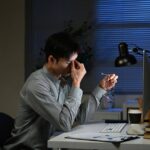
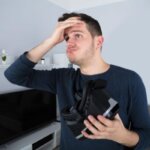
If you feel dizzy after wearing glasses, it can be confusing because the lenses may look clear while your balance still feels off. The useful question is whether this is normal adjustment, eye strain, a lens or frame issue, or a symptom that should not be blamed on glasses.
1. Feel Dizzy After Wearing Glasses: what to check first
The first thing to notice is when the dizziness started. If it began right after getting new glasses, changing your prescription, switching lens type, or wearing glasses again after a long break, your brain may simply be adjusting to a new way of processing distance, depth, and movement.
This can feel like mild unsteadiness, a floating feeling, visual pulling, slight nausea, or a strange off-balance sensation when walking. It does not always mean the prescription is wrong. Even when the image looks sharper, your eyes and brain still need to recalibrate how space feels through the lenses.
2. When new glasses make you dizzy during adjustment
New glasses can make you dizzy when your vision is technically clearer but your brain is not used to the new input yet. The ground may look slightly closer or farther away, stairs may feel strange, screens may seem too sharp, and turning your head can make the room feel like it moves a little.
A mild adjustment phase is usually most noticeable during walking, reading, using stairs, scrolling, driving, or looking from near to far. This does not mean you should panic after one uncomfortable day. For many people, the symptoms improve as the brain learns the new prescription.
A normal adjustment pattern usually looks like this:
- The glasses are new or the prescription recently changed
- Vision is mostly clear, even if it feels strange
- The dizziness is mild or moderate, not severe
- Symptoms improve a little each day
- Breaks help, but symptoms return when wearing the glasses again
- There is no double vision, sudden vision loss, weakness, or slurred speech
If the dizziness is annoying but gradually improving, that usually points toward adaptation. If it gets worse instead of easier, do not treat it as normal adjustment.
3. Why clear vision can still feel wrong
One confusing part is that dizziness can happen even when the glasses seem to make everything clear. Clear vision and comfortable vision are not the same thing. A prescription can sharpen letters and edges while still changing depth perception, peripheral distortion, or how your eyes work together.
This is why some people feel weird after wearing glasses even when the prescription seems clear. The room may look sharper, but walking, turning your head, looking down at the floor, or moving through a bright store can still feel slightly off.
This is common when your new glasses correct astigmatism, when one eye changed more than the other, or when the lens design is very different from your previous pair. Your eyes may be seeing better, but your brain may still be interpreting the room through old habits.
4. Clues that point to prescription or frame fit
If your dizziness does not improve, the issue may not be simple adaptation. The prescription could be too strong, too weak, or slightly off in one eye. The pupillary distance may be wrong, or the optical center of the lenses may not sit where your eyes naturally look through them.
Frame fit matters too. If the glasses sit too high, too low, tilted, loose, or too far from your face, the lenses may distort the way your eyes receive the prescription. This can create a pulling feeling, eye strain, headaches, or dizziness that feels worse the longer you wear them.
Watch for these patterns:
- The dizziness stays the same after several days
- One eye feels more strained than the other
- You feel a pulling sensation behind the eyes
- Straight lines look slightly warped
- Walking feels harder than sitting
- The glasses slide down or sit unevenly
- You feel better with your old glasses
A wrong fit or measurement problem often feels consistent, not gradually improving. If every wearing session feels just as uncomfortable as the first one, ask the optician or eye doctor to recheck the lenses, frame position, and measurements.
5. Progressive lenses, reading glasses, and the fishbowl feeling
Progressive lenses and reading glasses can make dizziness more noticeable because they change how your eyes handle distance zones. Progressives have different lens powers in different areas, so looking through the wrong part of the lens can make the floor, stairs, or side vision feel distorted. Reading glasses can also feel strange if you use them while walking around or looking across the room because they are designed for close-up tasks, not distance viewing.
Some people describe this as a fishbowl effect. The center may look clear, but the edges feel curved, stretched, or unstable. With progressives, adjustment is not only about time; you also have to learn where to look through the lens, move your head instead of only your eyes, and avoid quick side glances until the lens zones feel more natural.
6. Eye strain signs that change the judgment
Eye strain can make dizziness feel more like pressure, heaviness, fatigue, or slow-building discomfort rather than sudden spinning. It often gets worse after screens, reading, driving, bright lights, or long focus sessions. The glasses may not be the only cause, but they can expose an existing strain pattern.
This is where the timing matters. If your dizziness appears mostly after hours of screen use, it may be related to focusing effort, dry eyes, lighting, posture, or switching between screen and distance vision. If it happens immediately every time you put the glasses on, lens fit or prescription becomes more suspicious.
Eye strain-related dizziness usually builds with use. Prescription or fit-related dizziness usually appears quickly after putting the glasses on and may not depend as much on screen time. Some people also describe this as feeling off balance in glasses rather than true spinning, especially during long focus tasks.
If bright stores or office lights make dizziness worse, this related guide may help: Feel Weird After Fluorescent Lights: Eye Strain, Anxiety, or Light Sensitivity.
7. When the dizziness may not be from the glasses
Not every dizzy feeling after wearing glasses comes from the glasses themselves. Sometimes glasses become the thing you notice because you put them on right before symptoms appear. The real trigger may be dehydration, low food intake, anxiety, motion sensitivity, migraine tendency, inner ear issues, or a separate medical problem.
The difference is usually in the symptom pattern. Glasses-related dizziness often connects clearly to wearing the lenses, looking through certain areas, walking, reading, or adjusting to a new prescription. Non-glasses dizziness may happen even after removing the glasses, appear with body-wide symptoms, or occur in situations unrelated to vision.
Get medical help promptly if dizziness is severe or comes with sudden weakness, trouble speaking, sudden vision loss, chest pain, fainting, a new severe headache, or one-sided numbness. Those symptoms should not be explained away as new glasses adjustment.
If dizziness also appears with wearable pressure or sound, compare that trigger separately in Feel Dizzy After Wearing Headphones: ANC, Pressure, or Inner Ear?
8. What to try before deciding the glasses are wrong
Start by wearing the glasses in controlled situations. Use them while sitting, reading at a normal distance, or walking slowly at home before testing them in busy stores, stairs, traffic, or long driving. This helps you separate normal adaptation from a lens problem.
Do not keep switching constantly between old and new glasses every few minutes. That can make adaptation harder because your brain keeps comparing two visual systems. Short breaks are fine if the dizziness becomes too uncomfortable, but judge the overall trend across several days.
Use this simple decision rule:
- If symptoms are mild and improving, keep adapting
- If symptoms are strong, worsening, or unchanged, get the glasses checked
- If vision is distorted, doubled, or uneven, do not wait two full weeks
- If dizziness appears with neurological or severe body symptoms, seek medical care
The key question is not just how dizzy you feel, but whether the pattern is improving. Improvement points toward adjustment. No improvement points toward prescription, measurement, frame fit, or another cause.
9. When to go back to the eye doctor
A few uncomfortable days can be normal with new glasses, but dizziness that lasts around two weeks without improvement deserves a recheck. You should also go sooner if the dizziness is strong, if you cannot function normally, if one eye feels clearly wrong, or if the glasses make walking or driving feel unsafe.
Ask for the practical checks, not just general reassurance. The prescription, pupillary distance, lens placement, optical center, frame alignment, and lens type should all be reviewed. If the prescription is correct but the dizziness continues, the eye doctor may also consider eye teaming issues, binocular vision problems, or whether a different lens design is needed. Do not force yourself to push through glasses that make daily movement, stairs, or driving feel risky.
10. Final takeaway
Feeling dizzy after wearing glasses is often normal when the prescription or lens type is new, but it should gradually improve instead of staying equally uncomfortable.
- Mild dizziness after new glasses usually points to adjustment
- Dizziness that does not improve points to prescription, measurement, or frame fit
- Progressive lenses and reading glasses can cause stronger spatial distortion
- Eye strain usually builds with screens, reading, lights, or long focus
- Severe dizziness with sudden vision, speech, weakness, or fainting symptoms needs urgent care