If you feel dizzy after hip thrusts, it can feel alarming because the set may target your glutes, but the signal often shows up as a head rush, weak feeling, or almost-faint sensation. The useful judgment is whether it happens during the thrust, after sitting up, from bar pressure, or with symptoms that mean you should stop.
1. Feel Dizzy After Hip Thrusts and the First Timing Clue
Feeling dizzy after hip thrusts is not the same as feeling tired after a hard glute set. The first thing to check is timing. Dizziness during the hardest reps usually points toward breathing pressure, bracing, bar pressure, or head position, while dizziness after the set often points toward the way your body reacts when you sit up or stand.
This timing clue helps explain why hip thrusts make you dizzy without treating every head rush as the same problem. If the dizzy feeling appears only after heavy barbell hip thrusts and fades quickly with rest, the movement setup may be the main issue. If it appears during lighter sets, lasts longer than a few minutes, or feels like you may pass out, the set should stop.
2. When a Head Rush Starts After Sitting Up
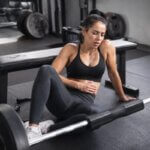
A hip thrust finishes from a low, supported position after your glutes, core, and breathing have been working hard. If you sit up quickly, stand immediately, or start unloading plates right away, your body may not adjust smoothly. That sudden transition can create a head rush even if the set itself felt controlled.
This pattern usually feels delayed. You may finish the last rep, lower the bar, feel normal for a second, then suddenly feel lightheaded, warm, weak, or slightly disconnected when you move upright. Dizziness that starts after position change is different from dizziness that builds during the reps.
3. When Breathing and Bracing Make the Set Feel Too Pressurized
Heavy hip thrusts can make you brace harder than you realize. You may inhale, tighten your abdomen, drive the weight up, and hold pressure through several reps without fully resetting your breath. That can make the set feel intense in your head, throat, or chest before your glutes are actually the limiting factor.
The clue is whether the dizziness comes with head pressure, facial flushing, a tight throat, ear pressure, or a sudden rush near the hardest reps. In that pattern, the problem is not just muscle fatigue. The set has become a pressure-heavy effort, especially if you are holding your breath through the top of each rep.
A simple test is to lower the load, pause briefly between reps, and exhale through the hard part of the thrust. If the dizziness becomes milder when your breathing stays controlled, the issue was probably breath-holding and bracing pressure rather than hip thrusts being a bad exercise for you.
4. When Bar Pressure Adds a Different Signal
Hip thrusts have one trigger that many other lower-body exercises do not: direct pressure across the front of the hips. If the bar sits too high, digs into the lower abdomen, or shifts into soft tissue, the movement can create more than glute tension. It can add stomach pressure, throat tightness, nausea, sweating, or a sudden need to stop.
This does not always feel like simple dizziness. Some people describe it as feeling sick, faint, compressed, or unsettled during the set. If the dizzy feeling appears only with barbell hip thrusts but not with glute bridges, cable pull-throughs, or machine versions with better padding, the pressure point deserves attention before you blame your conditioning.
If stomach pressure or nausea becomes the main signal, compare that pattern with Feel Nauseous After Hip Thrusts: Bar Pressure or Stop Signal?
5. When Almost Passing Out Changes the Judgment
Almost passing out after hip thrusts should not be treated as normal workout discomfort. A brief head rush that fades after sitting still is one thing. Feeling like your vision is narrowing, your body is going weak, or you need to grab something to avoid falling is a stronger signal.
This matters because hip thrusts are usually done around a bench, barbell, plates, and hard flooring. Even a short faint feeling can become risky if it happens while you are moving away from the setup. If you feel close to blacking out, stay down or seated, breathe normally, and do not rush to stand or unload the bar.
Pay attention to whether it happens only after maximal sets or also during lighter work. A near-faint feeling after a heavy personal-record attempt may point to pressure, breath-holding, or standing too fast. The same feeling during warm-ups, moderate sets, or repeated sessions deserves a more cautious response.
6. When Heavy Glute Work Is the Broader Pattern
Sometimes the issue is not only the hip thrust setup. Heavy glute work can be systemically demanding, especially with high reps, short rest, drop sets, or sets pushed too close to failure. Your glutes may feel capable of more reps, but your breathing, blood pressure response, and recovery speed may already be behind.
This is more likely when you also feel lightheaded after leg press, squats, deadlifts, lunges, or other lower-body exercises. In that case, the hip thrust may simply be the movement where the signal becomes most obvious. The broader pattern is usually about effort level, bracing habits, rest time, hydration, food timing, or how aggressively the whole lower-body session is built.
If similar head rushes happen on other lower-body machines, use Feel Dizzy After Leg Press: Head Rush or Almost Fainting? as the next comparison.
7. How to Adjust the Set Before Dizziness Builds
Start with the smallest changes first. Use enough padding, keep the bar across the hip crease rather than the soft lower stomach, and make sure the bench height does not force your neck or ribs into an awkward position. A cleaner setup often reduces dizziness because you are no longer fighting bar pressure, poor positioning, and heavy effort at the same time.
Then adjust the dose. Lower the load slightly, avoid grinding reps, rest longer between heavy sets, and sit up slowly after the bar comes down. If dizziness only appears on heavy barbell hip thrusts, test a machine hip thrust, dumbbell glute bridge, cable pull-through, or lighter paused version to see whether the problem follows the movement or the barbell setup.
Use this order before removing hip thrusts completely:
- Move the bar or pad onto the hip crease, away from the lower stomach.
- Exhale through the hard part of the rep instead of holding pressure through the set.
- Stop one to two reps before your breathing gets messy.
- Stay down or seated briefly after the final rep.
- Sit up first, then stand after the head rush has passed.
- Rest longer before the next heavy set.
- Avoid heavy meals, too much fluid, or strong pre-workout right before glute training.
8. When the Dizzy Feeling Is a Stop Signal
Mild dizziness after hip thrusts can happen when breathing, pressure, load, and position change are poorly matched. It should start settling once you stop the set, stay still, breathe normally, and give your body time to recover. It should also become less frequent when you improve padding, reduce breath-holding, lower the load, and stand up more slowly.
Stop the workout if dizziness comes with fainting, chest pain, unusual shortness of breath, severe headache, confusion, irregular heartbeat sensations, one-sided weakness, repeated vomiting, or symptoms that do not improve after resting. Those are not signs to push through for a better glute workout. They are reasons to stop training and get medical help.
Repeated dizziness also deserves attention if it happens every time you do hip thrusts despite lighter weights, slower transitions, better padding, and controlled breathing. At that point, the pattern is no longer just one hard set. The exercise setup, training dose, recovery, or your general tolerance needs a closer look.
9. The Bottom Line
Feeling dizzy after hip thrusts usually means the movement created too much breathing pressure, bar pressure, lower-body demand, or sudden position change for your body to handle smoothly in that moment.
- Dizziness during the thrust often points to breath-holding, bracing, or pressure.
- Dizziness after sitting up often points to a fast position change.
- Dizziness with stomach pressure or nausea points more toward bar placement and compression.
- Dizziness that improves with lighter loads, better padding, slower transitions, and controlled breathing is usually a setup issue.
- Dizziness with fainting, chest pain, severe headache, confusion, unusual shortness of breath, or symptoms that do not settle is a stop signal.