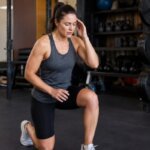
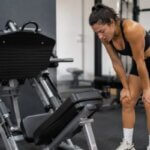
If you feel nauseous after a leg workout, the sick feeling can be frustrating because leg day often feels different from other training. The useful judgment is whether nausea comes from lower-body blood flow demand, breath-holding, short rest periods, meal timing, or pushing heavy leg sets past your current recovery limit.
1. Feel Nauseous After Leg Workout and the First Pattern to Check
Feeling nauseous after a leg workout is not always the same as feeling nauseous after exercise in general. Leg training uses large muscle groups at the same time, especially during squats, leg presses, lunges, deadlifts, step-ups, and high-rep machine work. When those muscles demand more blood flow and oxygen, your stomach can feel unsettled even if the workout does not look fast or cardio-heavy.
The first pattern to check is when the nausea starts. If it appears during heavy squats, leg presses, walking lunges, or high-rep sets, the trigger is usually intensity, bracing, breath pressure, or not enough rest between sets. If it appears after the whole workout, especially with shakiness, sweating, thirst, overheating, or weakness, the cause may involve hydration, low fuel, heat, or overall workout load.
A simple split helps: nausea during a hard leg set points toward pressure, effort, and blood-flow demand; nausea after the session points more toward recovery, meal timing, hydration, and total training stress. That distinction matters because leg-day nausea often comes from the specific demand of lower-body training, not just from exercising too hard in a general way.
If nausea happens after many workout types, use Feel Nauseous After Exercise: Intensity, Dehydration, or Blood Sugar? to separate leg-day strain from a broader pattern.
2. Why Leg Day Can Hit Your Stomach So Hard
Leg day can make you feel sick because your lower body can create a very large demand all at once. Heavy compound lifts and high-rep leg exercises force your body to prioritize working muscles, breathing, heart rate, and blood pressure control. Digestion becomes less important in that moment, so your stomach may feel heavy, sour, tight, or unstable.
This is why leg workouts can feel different from upper-body sessions. A hard chest or arm workout may burn locally, but a hard set of squats or leg presses can feel like your whole system is being pulled into the effort. Your breathing changes, your heart rate jumps, your legs flood with tension, and your stomach may react as if the effort has crossed a line.
The clearest sign is a sudden sick wave after a demanding set. If nausea spikes after heavy squats, high-rep leg press, Bulgarian split squats, or walking lunges, the issue is probably not random stomach sensitivity. It is more likely the combination of large-muscle demand, high effort, breath control, and not enough time for your body to settle.
3. When Squats, Leg Press, and Lunges Create Different Signals
Nausea after squats often points to the combination of leg effort, trunk bracing, breath control, and abdominal pressure. During a heavy squat, many people hold their breath too long or brace harder than they realize. That can create a fast pressure shift, especially near the hardest part of the rep, and the result may feel like nausea, heat, lightheadedness, or a sudden urge to stop.
Nausea after leg press often points to high reps, short rest, or pushing too close to failure. The body is supported, so the movement can feel safer than a squat, but that also makes it easy to chase deep fatigue without noticing how much total strain is building. If leg press makes you feel sick more often than free-weight work, the trigger may be excessive volume, locked-in pressure, or staying in the set too long after your breathing has changed.
Lunges and split squats add another layer because they combine leg burn, balance, breathing, and repeated position changes. If you feel nauseous after walking lunges or Bulgarian split squats, the issue may be less about one heavy rep and more about the long set duration. The longer the set continues after form breaks, the more likely your stomach starts reacting to the total stress.
4. When Breathing and Bracing Turn Effort Into Nausea
Breathing is one of the biggest reasons leg workouts make people feel sick. Heavy lower-body exercises naturally make you brace, but bracing should not become a long, uncontrolled breath hold. When you lock your breath, tighten your abdomen, grind through the rep, and rush into the next one, pressure builds faster than your body can reset.
The sign is direct: if nausea appears when you are straining, holding your breath, or finishing a set with a red face and tight throat, the set is too aggressive for that day. This does not mean squats or leg presses are bad. It means the load, reps, rest time, or breathing control did not match your current capacity.
For heavy reps, use controlled bracing instead of panic bracing. For higher-rep leg work, breathe steadily between reps and avoid turning the whole set into one long pressure hold. If you cannot regain normal breathing before the next set, you are not resting long enough for nausea prevention.
If pressure-heavy core work causes the same sick feeling, check Feel Nauseous After Ab Workout: Core Pressure, Breathing, or Intensity? next.
5. When Short Rest and Failure Sets Push Leg Day Too Far
Leg nausea often appears when the workout is structured too aggressively. Drop sets, supersets, short rest periods, high-rep leg press, repeated sets to failure, and brutal finishers can overload your system before your muscles fully give out. Your legs may still be moving, but your stomach, breathing, and nervous system may already be past their limit.
This is especially common when someone treats every leg exercise like a test. Squats near failure, then leg press near failure, then lunges, then extensions, then hamstring curls with short rest can build nausea even in someone who is not unfit. If you feel like throwing up after leg day, the problem is often not one exercise but the total stack of hard sets, short rest, and repeated near-failure work.
A better leg workout still challenges the legs but gives your body time to stabilize. Longer rest periods are not laziness on leg day. For hard compound lifts, two to three minutes can be much more useful than rushing into the next set while your heart rate, breathing, and stomach are still unsettled.
6. When Food, Water, and Pre-Workout Make It Worse
Meal timing matters because leg training can disturb digestion more than many people expect. A heavy meal before squats, lunges, or leg press can sit in the stomach while your body redirects effort toward your legs. On leg day, the same meal can feel worse because heavy lower-body sets add bracing, pressure, and a stronger full-body effort spike.
Too much water right before training can create a similar problem. The issue is not hydration itself. The issue is a full, sloshing stomach combined with heavy bracing, hard breathing, and high lower-body effort. Slow hydration through the day usually works better than trying to fix thirst by drinking a large amount right before the first set.
Pre-workout can also make leg-day nausea worse, especially when taken on an empty stomach or at a high dose. Caffeine, stimulants, and strong flavors may feel manageable during upper-body work but become harder to tolerate during heavy lower-body training. If nausea shows up mostly on days with pre-workout, reduce the dose or test the same workout without it before blaming the exercises.
7. How Long Leg-Day Nausea Should Last
Mild leg-day nausea should start settling once you stop pushing, cool down, and let your breathing return to normal. A short wave of nausea after a brutal set can happen when the effort was too high, the rest was too short, or the workout was more intense than your current conditioning can handle. In that case, the feeling should gradually fade instead of continuing to build.
A useful expectation is that normal intensity-related nausea should start improving as your breathing, heart rate, and body temperature settle. It may fade faster if you walk slowly, sip fluids, loosen tight clothing, and avoid lying flat immediately after a hard set. If nausea keeps getting worse, turns into repeated vomiting, or comes with severe dizziness or faintness, treat it as more than ordinary leg-day discomfort.
Repeated nausea after every leg workout also deserves attention. If you feel sick even with lighter loads, longer rest, better food timing, and controlled breathing, the pattern is no longer just hard leg day. At that point, look at hydration, blood pressure, medications, reflux, blood sugar patterns, heat exposure, and overall training load.
8. How to Stop Feeling Nauseous on Leg Day
The first move is to stop the set before nausea climbs. Do not keep grinding through leg work just because the plan says you still have reps left. Stand or sit upright, breathe slowly, move to a cooler area, and let your body settle before deciding whether to continue.
Do not lie flat right away after a brutal leg set. Slow walking, very easy cycling, or simply standing calmly can help your body transition out of the effort more smoothly. If your stomach feels unstable, take small sips instead of gulping water, and avoid a large meal until the nausea has settled.
Use this adjustment order:
- Add longer rest before reducing the whole workout.
- Reduce the leg exercise that triggers nausea first, instead of cutting the whole session.
- Stop one to two reps before failure on nausea-prone exercises.
- Reduce high-rep leg press, lunges, and drop sets first.
- Breathe between reps instead of holding pressure through the full set.
- Avoid large meals, excess water, and strong pre-workout right before training.
- Use a slow cool-down instead of collapsing on the floor after hard sets.
The adjustment is working when your legs still feel trained, but your stomach no longer feels like it is being dragged through the workout.
9. Warning Signs That Change the Meaning
Most leg-workout nausea is manageable when it is mild, brief, and clearly linked to hard sets, short rest, poor breathing, heavy meals, heat, or pre-workout. It should ease when you stop pushing, cool down, breathe normally, and let your heart rate settle. That pattern is different from nausea that keeps escalating or comes with stronger symptoms.
Stop the workout if nausea comes with fainting, chest pain, severe dizziness, confusion, severe headache, unusual shortness of breath, repeated vomiting, severe abdominal pain, or weakness that does not improve. Also stop if the nausea appears suddenly during a normal set that usually feels easy. Those are not signs to push through for discipline.
Pay attention if leg-day nausea happens every time you train, even after lowering intensity and improving meal timing. A hard leg workout can make your body uncomfortable, but repeated sickness should not become the price of progress.
The Bottom Line
Feeling nauseous after a leg workout usually means lower-body intensity, blood-flow demand, breath pressure, short rest, meal timing, or pre-workout stimulation pushed that session past what your body could handle smoothly.
- Nausea during squats, leg press, or lunges often points to intensity, bracing, or short rest.
- Nausea after the whole workout may point to hydration, low fuel, heat, or total training load.
- Nausea after eating usually means meal timing or exercise selection needs to change.
- Nausea after pre-workout means caffeine, dose, or empty-stomach timing should be tested.
- Nausea with fainting, chest pain, severe dizziness, confusion, repeated vomiting, or severe abdominal pain is a stop signal.