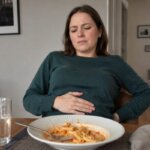
Heartburn after eating pizza can feel confusing because the same meal may bother you one night and feel fine another time. The real trigger is often not one ingredient alone, but the mix of tomato sauce, cheese fat, greasy toppings, portion size, and when you ate it.
1. Start With the Pattern Before Blaming One Ingredient
A burning feeling after a heavy meal usually needs a timing check first. The most useful question is whether the burn started quickly after eating, later when lying down, or only after a larger-than-usual portion.
If the same food causes symptoms only at night, meal timing may matter as much as the ingredients. If it happens even with a small daytime serving, the sauce, fat, or toppings become more likely triggers.
2. When Tomato Sauce May Be the Main Trigger
Tomato sauce can be a direct reason for pizza heartburn because it is acidic and often seasoned with garlic, onion, or spices. If pizza makes your chest burn soon after a slice with red sauce, tomato sauce acid reflux is a reasonable first suspect.
This is more likely if marinara, ketchup, salsa, or tomato pasta sauce also gives you chest burning or a sour taste. In that case, trying a smaller amount of sauce or a white pizza can tell you more than avoiding every topping at once.
3. When Cheese and Greasy Toppings Matter More
High-fat cheese, pepperoni, sausage, and oily toppings can slow stomach emptying and make reflux easier. This is why pizza gives you heartburn even when the sauce does not taste especially acidic.
Fat can also relax the lower esophageal sphincter, the valve that helps keep stomach contents from moving upward. If cheese pizza heartburn or pepperoni heartburn feels worse than plain bread or tomato foods, the fat load may be the bigger issue.
4. When Portion Size Turns a Normal Slice Into Reflux
A large meal can push pressure upward, especially when pizza is eaten quickly. Even if one slice feels fine, three or four slices can create acid reflux after pizza because the stomach is fuller and digestion is slower.
This pattern is common when the discomfort includes bloating, burping, chest burning, or a sour taste in the mouth. Eating slower and stopping before feeling stuffed can be a better test than changing every ingredient.
If bloating feels stronger than burning after large portions, compare it with Pasta Makes Me Bloated? Wheat, Portion, or Sauce Trigger
5. When Nighttime Timing Changes the Answer
Heartburn after eating pizza at night is often worse because lying down removes gravity from the equation. If symptoms start after you recline, the problem may be less about one topping and more about a heavy, fatty meal sitting in the stomach.
Try leaving at least a few hours between the meal and bed, especially after a larger serving. If pizza reflux at night is the main pattern, timing may be the first thing to fix before blaming tomato sauce alone.
If the burn appears mainly after late dinners, check whether timing is the real trigger in Can’t Sleep After Eating Late: Digestion, Reflux, or Blood Sugar?
6. How to Eat Pizza Without Heartburn More Often
The most practical test is to change one variable at a time. Try light cheese, fewer greasy meats, less red sauce, a smaller portion, or an earlier meal instead of removing pizza completely.
If you want to know how to eat pizza without heartburn, start with the pattern that matches you most closely. Sauce sensitivity points toward white sauce or less tomato, while fat sensitivity points toward lighter cheese and grilled chicken or vegetables.
7. When the Burning May Need Medical Attention
Most occasional pizza-related heartburn is not an emergency, but chest symptoms should be treated carefully. Chest pressure, shortness of breath, pain spreading to the arm or jaw, vomiting blood, black stool, or trouble swallowing should not be assumed to be just heartburn.
You should also be more cautious if heartburn happens frequently, wakes you from sleep, or keeps returning despite changing meal size and timing. Repeated reflux can need proper medical evaluation rather than just another food swap.
8. What to Remember
- Heartburn after eating pizza is usually a combination trigger, not always one bad ingredient.
- Tomato sauce is more likely if other acidic tomato foods also cause throat burn or sour reflux.
- Cheese, pepperoni, and sausage are more likely if greasy or high-fat meals cause similar symptoms.
- Nighttime pizza reflux often points to timing, portion size, and lying down after eating.
- Change one factor at a time so you can identify whether sauce, fat, portion, or timing matters most.
- Severe chest symptoms, trouble swallowing, black stool, or repeated reflux should be checked medically.