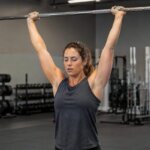
Headache after overhead press can feel more specific than a normal workout headache because it often starts near the top of the press, at lockout, or right after the bar comes back down. The useful judgment is whether the pain follows neck tension, breath-holding, overhead pressure, or a warning pattern that means you should stop pressing.
1. Headache After Overhead Press When the Pattern Starts to Show
A headache after overhead press should first be judged by timing. If the pain starts while the bar is moving past your face, near lockout, or right after you bring the bar back to your shoulders, the trigger is often connected to how your neck, jaw, breath, and upper traps behave during the hardest part of the lift.
This is different from general fatigue after a shoulder workout. Overhead pressing puts the weight above your head while your body is braced underneath it, so a small form change can turn into pressure at the base of the skull, behind the eyes, or across the head. The main question is not just “Was the weight heavy?” but “What changed at the exact moment the headache appeared?”
2. The Neck and Trap Clue Near the Top of the Press
Neck tension is one of the strongest clues when a shoulder press headache feels like it starts at the base of the skull. This often happens when the upper traps shrug upward, the jaw clenches, or the head pushes forward as the bar reaches the top. The shoulders may finish the rep, but the neck does too much of the work.
A useful test is to notice whether the headache comes with tight traps, a stiff neck, pressure behind one eye, or soreness that travels from the upper neck into the head. If the pain improves when you lower the weight, stop shrugging into the lockout, relax your jaw, and keep your neck stacked instead of craned forward, the issue is more likely a tension pattern than a random exertion headache.
3. Breath-Holding and the Pressure Moment
Breath-holding can make overhead press headaches feel sudden and intense. A strong brace is not the problem by itself, but locking your breath through the entire rep can send the set from controlled effort into head pressure, especially when the bar slows and you grind through the sticking point.
This is where a headache during overhead press can overlap with a pressure headache after shoulder press. If the pain appears on heavy sets, near failure, or during reps where your face, jaw, and neck tighten at the same time, test your breathing before blaming the movement. Brace before the rep, press with control, and let air out through the hardest part instead of holding everything until the bar is fully locked out.
If the same pressure headache appears during vertical pulling too, compare the neck and breath pattern in Headache After Pull Ups: Neck Strain, Breath-Hold, or Red Flag?
4. Bar Path, Head Position, and the Lockout Check
Overhead press headaches often show up when the head moves too aggressively around the bar. Some lifters lean back, look up, shove the chin forward, or push the head too far “through” the arms at the top. That can load the neck while the shoulders are already under tension.
The better cue is controlled clearance, not dramatic head movement. Let the bar pass the face, keep your gaze mostly forward, and finish with the ribs, neck, and jaw under control. If the headache after military press happens most often at lockout, the problem may be less about raw strength and more about how your head and upper back finish the rep.
If head pressure turns into lightheadedness or balance change, compare the next signal in Feel Dizzy After Overhead Press: Breath-Holding, Neck Position, or a Sign to Stop?
5. When Dumbbell Shoulder Press Changes the Signal
A headache after shoulder press can show up differently depending on whether you use dumbbells, a barbell, or a seated machine. Dumbbells force each side to stabilize separately, so one shoulder may drift, one trap may shrug harder, or your neck may tense while you try to keep both weights even.
If barbell overhead press causes head pressure but dumbbells do not, the issue may be the standing brace, bar path, or lockout position. If a headache after dumbbell shoulder press appears faster than it does with a barbell, the trigger may be uneven shoulder control, trap compensation, or fatigue from stabilizing both arms. This comparison helps you avoid treating every shoulder press headache as the same problem.
6. When the Headache Is More Than a Technique Problem
Not every headache after lifting overhead should be treated as a form cue. A mild, repeatable tension headache that improves with lighter weight and better breathing is one category. A sudden severe headache, the worst headache you have felt, or pain with vision changes, fainting, chest pain, confusion, weakness, or an irregular heartbeat belongs in a different category.
Use a stricter rule for overhead pressing because the weight is above you. If the headache is sudden, severe, unusual, or comes with neurological, chest, or fainting symptoms, stop the workout and get medical advice. Do not test another set to see whether it happens again.
7. How to Adjust Your Next Pressing Session
Your next session should separate pressure, neck tension, and load instead of changing everything at once. Start lighter than usual, leave more reps in reserve, and stop before the rep turns into a grind. Keep your jaw loose, avoid shrugging into the bar, and breathe through the hard part instead of clamping down from start to finish.
Use the result as your next clue. If lowering the weight fixes it, load or pressure was probably the main trigger. If better breathing fixes it, breath-holding was the stronger clue. If a neutral neck and smoother lockout fix it, the headache was more likely tied to trap tension or head position. If the headache returns despite all three changes, stop treating it like a simple form issue and step back from overhead pressing until you can judge it more safely.
8. The Bottom Line
A headache after overhead press is best judged by the exact moment it appears and whether it follows neck tension, breath-holding, lockout position, or a broader warning pattern.
- During the hard part of the rep: check breath-holding and pressure buildup.
- Near lockout: check neck position, jaw tension, and trap shrugging.
- After lowering the bar: check pressure release and recovery between sets.
- With dumbbells only: check uneven shoulder control and stabilizer fatigue.
- With sudden severe pain, vision changes, fainting, chest pain, confusion, weakness, or repeated unusual symptoms: stop pressing and get medical advice.