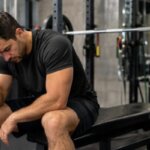
Headache after leg press can feel alarming because the pain may hit while you are still pushing, right after the sled locks, or when you sit up from the machine. The useful judgment is whether it follows a pressure-and-breathing pattern, a neck or jaw tension pattern, or a sudden severe warning pattern that should stop the workout.
1. Headache After Leg Press and the First Timing Clue
Headache after leg press should be judged first by when it starts. If your head hurts during the hardest part of the push, especially near the final reps, the trigger is usually linked to bracing, breath-holding, facial tension, or a fast pressure spike during the set.
If the headache appears after you finish the set, the pattern changes slightly. You may lock the machine, release your brace, sit up, and then feel pulsing head pressure or pain near the back of your head. That points more toward pressure release, breathing reset, and how quickly your body shifts out of the set.
2. Why the Machine Can Create Head Pressure So Fast
The leg press lets you push heavy weight while your back, hips, and torso stay fixed against the pad. That support can make the movement feel controlled, but it also lets you load the exercise heavily and grind through reps without noticing how much pressure is building in your head.
This is what makes a leg press headache different from a general leg workout headache. Your knees move toward your torso, your abdomen compresses, your breath may lock, and your legs keep pushing against a fixed machine. This is why some people search why leg press makes their head hurt even when the movement itself feels controlled.
3. When Breath-Holding Turns the Set Into a Pressure Spike
Breath-holding is one of the strongest clues when leg press makes your head hurt. Many people brace hard at the bottom, hold their breath through the push, and keep that pressure through several reps. A short brace for a difficult rep is different from turning the whole set into one long breath-hold.
The pattern is especially clear if the headache feels pounding, tight, or explosive near the final hard reps. You may also notice a red face, tight throat, clenched jaw, or a sense that pressure is rising behind your eyes. If the headache drops when you reduce the load, breathe between reps, and stop before grinding, pressure management was probably the main issue.
If pressure also turns into nausea during lower-body sets, compare the squat pattern here: Feel Nauseous After Squats: Breathing, Pressure, or Too Much Intensity?
4. When Seat Position and Neck Tension Add to the Pattern
A headache during leg press can also come from how your body is positioned in the machine. If the seat is too deep, your knees may come very close to your torso at the bottom of the rep. That can increase abdominal pressure, make breathing harder, and turn each rep into a compressed push instead of a controlled lower-body movement.
Your head and neck position matter too, but not in the same way as bench press. On this machine, the problem is less about pressing your skull into a bench and more about tensing your neck, lifting your chin, clenching your jaw, or bracing your upper body while your legs do the work. If the pain sits at the base of your skull or spreads from the neck upward, check whether your neck is staying neutral or quietly joining the lift.
5. When a Head Rush Changes the Picture
A headache that stays as head pressure is one pattern. A headache that comes with lightheadedness, tunnel vision, weak legs, or a near-faint feeling is a different pattern. That does not automatically mean something dangerous is happening, but it changes the next judgment because the issue is no longer only pain.
This is most important when the symptom appears after you finish the set and sit up quickly. Heavy lower-body work can create a strong recovery demand, and standing up too fast can make the head rush feel sharper. If the main feeling becomes dizziness rather than pain, judge that separately instead of forcing it into a headache-only explanation.
If head pressure turns into lightheadedness or near-fainting, use this next check before you train again: Feel Dizzy After Leg Press: Head Rush or Almost Fainting?
6. When Load, Reps, and Failure Make the Signal Worse
The headache is more likely when the set is too heavy, too long, too close to failure, or stacked after several hard leg exercises. The machine makes it easy to keep pushing because balance is not the limiting factor. Your legs may still move the sled, but your breathing, blood pressure response, and head pressure may already be past your useful limit.
This section is about the pattern, not the fix yet. If the pain mainly appears on heavy sets, high-rep sets, drop sets, or final grinding reps, the trigger is probably tied to training stress rather than the machine alone. A headache that only appears when the set becomes a strain is a different signal from pain that appears during light warm-up reps.
7. When the Pain Should Stop the Workout
A mild headache after one hard set that fades with rest is different from a sudden severe headache during the lift. Stop the set immediately if the pain is explosive, unusual, or feels like the worst headache you have had. Do not test another heavy rep to see whether it happens again.
Use a stricter rule if the headache comes with fainting, confusion, vision changes, vomiting, chest pain, trouble speaking, one-sided weakness, numbness, a stiff neck, or symptoms that do not settle after resting. A new sudden headache during the movement, especially one that appears with light weight or keeps repeating despite easier sets, should be treated as a stop signal and checked medically.
8. How to Test Your Next Session Without Repeating the Same Mistake
Your next session should be a controlled test, not a repeat of the same painful set. Start with lighter weight, stop well before failure, breathe between reps, keep your jaw relaxed, and sit still for a moment after the final rep before standing up.
Use the result to separate the cause. If the headache disappears when the load is lighter and your breathing stays controlled, breath-holding and pressure were the main clues. If it improves when your seat position is less compressed, the setup was part of the problem. If it still happens during controlled warm-up sets, stop treating it as a normal lifting reaction.
9. The Bottom Line
A headache after leg press is best judged by timing, pressure buildup, breath control, machine position, and whether the pain is mild and repeatable or sudden and severe.
- During the push: check breath-holding, heavy bracing, grinding reps, and rising head pressure.
- After locking the machine: check pressure release, breathing reset, and sitting up too quickly.
- Back-of-head pain: check neck tension, jaw clenching, and head position against the pad.
- Repeated hard-set headaches: reduce load, reps, failure sets, and rest pressure before blaming the exercise itself.
- Sudden, severe, unusual, neurological, or repeated easy-set headaches: stop training and get medical guidance.