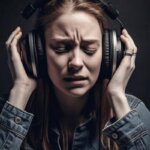
If you feel nauseous with noise-cancelling headphones, the pressure-like sensation can make an inner-ear problem seem obvious. The faster way to narrow it down is to compare ANC mode, movement, screen use, and how quickly the nausea stops.
1. Start With When the Nausea Appears
If your stomach turns within minutes of switching on ANC, the reaction is unsettling, but it does not automatically mean your inner ear has been harmed. The timing can separate an ANC-specific pattern from nausea caused by travel, screens, or another trigger.
Notice whether the feeling begins immediately or builds slowly, whether you are sitting still or travelling, and whether you are reading, scrolling, gaming, or moving your head. Also check whether it settles after ANC is switched off, only after the headphones are removed, or not until much later.
2. When the ANC Setting Changes the Result
ANC is more likely to be involved when normal or transparency mode feels comfortable but full noise cancellation repeatedly causes nausea. Keep the headphones, audio, volume, posture, and location unchanged so you are not changing several things at once.
Research has not established one common mechanism that explains why some people feel sick while using ANC. A pressure-like sensation may feel physical, but it does not by itself show that noise cancellation has damaged the ear or caused a vestibular disorder.
3. When Travel Makes the Pattern Clearer
If noise-cancelling headphones make you feel sick mainly while travelling on a bus, train, plane, or ferry, motion sensitivity may matter more than quiet sound alone. Looking down at a phone, sitting sideways, or turning your head while the vehicle moves may make the nausea appear sooner.
Motion sickness is often associated with conflicting information from vision, balance, and body movement. Compare the same ANC setting during a stationary session and a separate journey rather than assuming that the headphones are the only trigger.
4. When Screens or Spatial Audio Complete the Trigger
Some people tolerate ANC while listening to ordinary audio but feel nauseous during scrolling, gaming, moving video, or head-tracked spatial audio. In that pattern, the combination of ANC and moving visuals may be what tips you into nausea.
Repeat a brief session with the screen still, spatial audio disabled, and head tracking turned off while leaving the ANC level unchanged. If the nausea disappears, changing the media setup may be more useful than replacing the headphones immediately.
5. When the Pressure Feeling Needs a Closer Look
A vacuum-like or plugged-ear sensation can accompany nausea, but it does not prove that ANC is creating an atmospheric pressure change inside the ear. Active noise cancellation reduces parts of the surrounding sound by generating an opposing acoustic signal.
Compare full ANC with normal mode while keeping the fit and volume unchanged. Fullness that remains after the headphones are removed, affects one ear, or appears with hearing loss or ringing should not be treated as an ordinary ANC adjustment issue.
If the pressure-like feeling is actually painful, compare fit and sound separately before blaming ANC: Ears Hurt During Headphone Use? Try These 3 Tests First
6. How to Test the Trigger Without Making Yourself Sicker
Begin only when you are symptom-free, rested, hydrated, and sitting somewhere still rather than immediately after travel or prolonged screen use. Play familiar audio at a moderate volume and stop as soon as the recognizable nausea begins.
During separate sessions, compare one setting at a time by testing normal mode, the lowest available ANC level, and full cancellation. Record the setting, activity, onset time, accompanying sensations, and how quickly you recover after switching ANC off.
7. What Repeating the Test on Another Day Can Show
A single episode after a long commute, poor sleep, skipped food, or heavy screen use is difficult to attribute confidently to noise cancellation. ANC is more likely to be involved when the same nausea returns under similar conditions and eases after you switch that mode off.
Do not test several modes repeatedly in one sitting, because lingering nausea can blur the result of every later attempt. Short sessions on separate occasions provide a clearer comparison and reduce the temptation to push through worsening symptoms.
8. When Another Cause Fits Better Than ANC
The headphones may not be the main cause when nausea begins before you put them on, continues long after removal, occurs with every listening mode, or appears without headphones. Illness, migraine sensitivity, dehydration, missed meals, anxiety, strong smells, and visually demanding activities can complicate the pattern.
One home test cannot diagnose or rule out an inner-ear problem. Stop experimenting and seek medical advice when the episodes become more frequent, last longer, or begin appearing in unrelated situations.
9. When to Stop Testing and Get Medical Help
Arrange prompt medical assessment if nausea occurs with sudden hearing reduction, persistent one-sided fullness, new ringing, true spinning, or balance difficulty. Sudden changes in hearing should not be watched at home as though they were an ordinary reaction to ANC.
Seek emergency help for severe spinning or imbalance accompanied by facial drooping, arm weakness, speech difficulty, confusion, sudden vision changes, or an abrupt severe headache. These combinations should not be attributed to headphones without urgent evaluation.
If nausea comes with new ringing or muffled hearing, the problem may involve sound exposure rather than ANC alone. Ears Ringing After Headphones? When It May Signal Hearing Damage
10. Quick Summary
- ANC is more likely to be involved when nausea repeatedly starts in cancellation mode but not in normal or transparency mode.
- Symptoms limited to travel, scrolling, gaming, or head-tracked audio suggest a combined sensory trigger.
- A pressure-like sensation does not prove that the headphones are changing atmospheric pressure inside your ears.
- Compare one variable at a time during short sessions and stop as soon as the familiar nausea begins.
- Persistent symptoms, hearing changes, true spinning, balance problems, or neurological signs need medical attention.