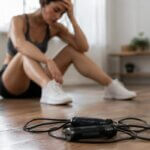
Feel nauseous after jump rope can feel strange because the exercise looks simple, but the repeated bounce can upset your stomach, breathing, and balance faster than expected. The useful question is whether the sick feeling comes from impact, rope pace, meal timing, breathing rhythm, or dizziness that changes how you should respond.
1. Feel Nauseous After Jump Rope and the First Pattern to Check
This reaction is not always the same as general workout nausea. Jump rope adds a repeated up-and-down bounce that can shake your stomach, raise your heart rate quickly, and make your breathing rhythm fall behind the movement. That is why someone may feel fine during walking, lifting, or slower cardio but feel sick from skipping rope after only a few short rounds.
The first clue is timing. If nausea starts while you are still jumping, the trigger is often bounce, pace, breathing, or motion sensitivity. If you feel sick right after stopping, the issue may be the sudden shift from fast repeated impact to standing still while your heart rate is still high. The next step is not to ask whether jump rope is “bad,” but which part of the movement your body is reacting to.
2. When the Bounce Starts Moving Your Stomach
Jump rope can make you nauseous because the stomach moves repeatedly with every landing. Even when each jump is small, hundreds of quick bounces can create a sloshing, sour, or unsettled feeling. This is different from exercises that compress the stomach; with jump rope, the main trigger is often repeated vertical impact.
This pattern is more likely if your stomach feels heavy, liquidy, or like food is moving around while you jump. It can happen after a meal, after drinking too much water at once, or during longer rope sets where the bounce never really stops. If walking or cycling feels fine but jump rope makes you feel like throwing up, the bounce itself deserves attention.
A useful test is to reduce the jump height and shorten the set. Use low, quiet jumps instead of high rebounds, keep the rope pace slow, and stop before the stomach feeling starts to climb. If nausea drops when the bounce becomes smaller, the problem is probably impact rhythm, not your whole fitness level.
3. When Rope Pace and Breathing Fall Out of Sync
Jump rope becomes harder when your rope speed is faster than your breathing control. Many people start by trying to keep the rope moving instead of keeping their breath steady. Once the rhythm gets rushed, nausea can build with heat, chest tightness, lightheadedness, or the sudden feeling that you need to stop.
This is why nausea after jumping rope often appears in short bursts rather than only after long workouts. The exercise can push your heart rate up quickly because there is no natural pause between reps. If you are chasing speed, counting jumps, or trying not to trip on the rope, you may hold your breath without noticing it.
The test is whether you can breathe smoothly through the whole set. If your breathing turns into gasping before your legs feel tired, the rope pace is probably too fast for that round. Slow the rope, use shorter rounds, and rest long enough that your breathing returns before starting again.
4. When Food or Water Timing Makes the Feeling Worse
Feeling sick after jumping rope often becomes worse when food or liquid is still sitting in your stomach. A heavy meal before skipping rope can feel different from a heavy meal before slower exercise because every landing keeps shaking the stomach. The result may feel like nausea, burping, reflux, side stitch, or a sour feeling that rises as the set continues.
Too much water right before jumping can create the same problem. Hydration matters, but chugging water just before jump rope can make the stomach feel stretched and sloshy. If you feel heavy, sour, or like liquid is moving around, give yourself more time after eating or drinking; if you feel shaky, weak, cold-sweaty, or drained, the problem may be too little fuel instead.
5. When Dizziness Changes the Meaning of the Nausea
Some people do not feel only stomach nausea after jump rope. They feel dizzy, swirly, off-balance, or almost motion sick. That pattern points more toward bouncing rhythm, visual focus, head movement, and balance-system demand than ordinary exercise intensity alone.
This can happen when your eyes keep tracking the rope, your head moves with every bounce, or you jump in a visually busy space. Mild motion-like nausea that settles after slowing down is judged differently from severe dizziness, faintness, or symptoms that keep building after rest. Try fixing your eyes on one stable point, lowering the jump height, and walking slowly after the set instead of stopping completely.
If bouncing moves also bring spinning, balance trouble, or visual motion sensitivity, Feel Dizzy After Jumping Jacks: Breathing, Exertion, or Balance Signal?
6. When Other Jumping Moves Trigger the Same Reaction
Jump rope nausea becomes more useful to analyze when you compare it with other movements. If only jump rope makes you sick, the likely trigger is the rope rhythm, repeated bounce, or stomach sloshing. If burpees, jumping jacks, squat jumps, or fast plyometric circuits also make you nauseous, the pattern is broader than one exercise.
That broader pattern often points to explosive movement dose. Your body may tolerate steady cardio but react badly to repeated jumps, short rests, fast breathing, and quick heart-rate spikes. In that case, the fix is not simply “avoid jump rope forever”; it is to reduce the number of jump-heavy movements in one session and build tolerance gradually.
If other explosive moves also turn your stomach during fast training rounds, too, Feel Nauseous After Burpees: Head Rush, Stomach Pressure, or Pace
7. How to Adjust the Next Jump Rope Session
The next jump rope session should be a controlled test, not a repeat of the same sick feeling. Start with short rounds, such as 20–30 seconds, and rest until your breathing and stomach fully settle. Keep the jumps low, quiet, and relaxed instead of trying to jump higher or faster than needed.
Use the first few rounds as information. If nausea appears only when the rope speed increases, pace is the main lever. If it appears only after eating or drinking close to the session, timing is the main lever. If it appears with swirly dizziness, visual motion, or balance changes, reduce bounce height and keep your gaze fixed. If it appears with shakiness or weakness, check fuel and recovery before blaming the rope.
A good adjustment still lets jump rope feel like cardio, but it should not make you fight nausea to finish. Stop the set while the feeling is still mild, walk slowly, and restart only if your stomach settles. If you keep pushing until you feel like throwing up after jumping rope, you are training past the signal instead of learning the pattern.
8. When the Sick Feeling Means You Should Stop
Mild nausea that fades after slowing down is usually a sign to adjust the workout. Nausea that keeps building, comes with severe dizziness, or makes you feel faint should be treated differently. Jump rope is a bouncing exercise, so pushing through symptoms can also make your landing and balance less reliable.
Stop the session if nausea comes with chest pain, fainting, severe dizziness, confusion, irregular heartbeat, severe headache, repeated vomiting, or shortness of breath that does not settle. Do not restart the workout at the same pace just because the set was short. The safer move is to end that round, recover fully, and change the next session’s dose.
Use this split while training:
- Brief nausea after fast rope rounds: slow the pace, shorten the set, and rest longer.
- Stomach sloshing or sourness: adjust meal timing, water timing, and jump height.
- Nausea with gasping or chest tightness: reduce rope speed and rebuild breathing control.
- Swirly nausea or balance trouble: lower the bounce, fix your gaze, and avoid sudden stops.
- Nausea with fainting, chest pain, severe dizziness, confusion, or repeated vomiting: stop exercising and get medical help.
9. The Bottom Line
Feeling nauseous after jump rope usually comes from repeated bouncing, rushed rope pace, poor breathing rhythm, food or water timing, or motion-like dizziness rather than one single cause.
- If your stomach feels sloshy or sour, check bounce height, meal timing, and water timing.
- If nausea rises as the rope gets faster, slow the pace and shorten the round.
- If breathing turns chaotic, rest longer before starting the next set.
- If dizziness or balance trouble comes with nausea, treat it as more than a stomach issue.
- If symptoms are severe, persistent, or come with fainting, chest pain, confusion, or repeated vomiting, stop the workout and get medical help.