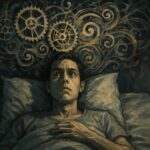
Can’t sleep after studying late can feel frustrating because your body may be tired, but your mind keeps replaying notes, examples, formulas, or tomorrow’s exam. The key is to judge whether this is short-term study-mode arousal, screen stimulation, exam stress, caffeine, or a sleep pattern that is starting to repeat.
1. Check the timing before you treat it like insomnia
The first question is whether the wakefulness starts mainly after late study sessions or also happens on normal nights. If you usually sleep normally but feel wired after cramming, homework, online lectures, exam prep, or a long review session, the problem is more likely a transition failure than a fixed sleep disorder.
This timing matters because studying does not always end when you close the book. Your brain may still be retrieving facts, testing itself, organizing details, or scanning for what you missed. If the problem appears only after intense study and improves with a real wind-down gap, treat it as study-mode arousal first.
2. When your mind keeps reviewing after the session ends
Late studying is different from passive reading because it keeps your recall system active. You may lie down and suddenly remember a definition, a practice question, a mistake in your notes, or one chapter you did not finish. That kind of mental replay can keep your attention locked on performance even after the actual session is over.
This is common after subjects that require problem-solving, memorization, writing, coding, math, science, language learning, or exam review. Your mind is not just “thinking too much.” It is still acting like it needs to recall, compare, correct, and prepare before it is allowed to rest, which is why it can feel like your brain won’t turn off after studying.
3. When screen-based studying keeps the signal too bright
Screen-based studying can make the shutdown harder because it combines light, interaction, and problem-solving. A printed textbook may still keep your mind active, but a laptop or phone adds tab switching, answer checking, lecture clips, PDFs, search results, messages, and bright visual input.
The clearest sign is that you felt sleepy before opening the device, then became more alert after studying on it. If you can’t fall asleep after studying on a computer, tablet, or phone, the first fix is not a complicated sleep trick. It is separating the bright, interactive part of studying from the final part of the night.
4. When exam pressure turns review into alertness
Exam stress feels different from normal mental activity. With study-mode arousal, your brain keeps reviewing. With stress alertness, the thoughts feel urgent, repetitive, or threatening. You may keep thinking, “I’m not ready,” “I forgot too much,” “Tomorrow will be bad,” or “I need to fix this before I sleep.”
Your body may also feel keyed up. Tight shoulders, jaw tension, shallow breathing, a faster heartbeat, stomach tightness, or restlessness in bed all point toward stress activation. If your study thoughts feel pressured rather than useful, the target is lowering urgency before trying to sleep.
If stress also makes your body feel hot in bed, compare the next pattern: Feel Hot When Trying to Sleep: Trapped Heat, Stress, or Night Sweats?
5. When caffeine, hunger, or a late routine changes the pattern
Late studying often comes with other sleep disruptors. Coffee, energy drinks, tea, pre-workout, chocolate, or even a small evening caffeine dose can keep your body alert longer than expected. Skipping dinner, studying while hungry, dehydration, or eating a heavy snack right before bed can also make your body feel unsettled when you finally lie down.
Look at the pattern instead of blaming one factor automatically. If you can’t sleep after cramming only when you use caffeine, caffeine is probably carrying much of the problem. If it happens even without caffeine after long study sessions, mental arousal is the stronger cause. If it happens mostly before tests, deadlines, presentations, or important school days, exam pressure deserves more attention.
6. What to do tonight without restarting study mode
Do not go back to your notes in bed. That is the biggest mistake after late studying because it keeps the same mental loop alive. Your brain receives the message that the session is not over yet, so sleep becomes another task to complete instead of a state to drift into.
Use a short study shutdown routine that closes the loop without adding new material:
- Write one line: what you finished, what can wait, and the first thing you will do tomorrow.
- Dim the lights and move away from the study area.
- Do something boring and non-academic until your alertness drops.
If you are still awake after about 20 to 30 minutes and feel more frustrated, get out of bed briefly. Keep the lights low and avoid your phone, study notes, lectures, answer keys, or exam forums. Return to bed when you feel sleepy again, not when you feel pressured to force sleep.
7. How to change tomorrow’s study-night setup
The best prevention is to stop treating bedtime as the final review period. Put the hardest recall work earlier, then make the last part of studying lighter and more mechanical. For example, organize materials, mark tomorrow’s starting point, or write a short checklist instead of opening a new chapter or starting a difficult practice set.
Create a clear “study is closed” signal. This can be as simple as closing every tab, putting the textbook away, writing tomorrow’s first task, and lowering the lights. The goal is not to create a perfect routine. The goal is to stop your brain from believing it still has to perform in bed.
If late studying feels less like exam worry and more like your brain staying in work mode, read Can’t Sleep After Working Late: Why Work Mode Stays On and When It’s a Problem.
8. When the pattern needs more attention
One restless night after a late study session is usually not the main concern. The pattern matters more. If you start needing hours to fall asleep after studying, feel anxious before bedtime, or become tired during the day but alert again at night, your sleep rhythm may be starting to shift.
Take it more seriously if the same sleep problem happens even on nights when you did not study late. Also pay attention if you regularly dread going to bed, depend on late caffeine to function, or cannot focus during the day because of repeated short sleep. If the problem repeats for weeks or damages daily function, it needs a more structured plan than another night of random sleep tips.
9. The Bottom Line
Can’t sleep after studying late is usually a sign that your brain has not fully exited study mode, but the right response depends on whether the trigger is mental replay, screen stimulation, exam stress, caffeine, or a repeated sleep pattern.
- If it happens only after intense late studying, treat it as study-mode arousal.
- If it is strongest after laptop, phone, tablet, or lecture use, treat screen stimulation as the main trigger.
- If your thoughts feel urgent, repetitive, or fear-based, treat it as exam stress.
- If it keeps happening on non-study nights, treat it as a developing sleep rhythm problem.
- If it continues for weeks, affects daytime function, or comes with severe anxiety, panic-like symptoms, low mood, or major sleep disruption, get professional advice.
Related posts:
 Can’t Sleep After Working Late: Why Work Mode Stays On and When It’s a Problem
 Can’t Turn Your Brain Off at Night: Racing Thoughts, Stress, or a Sleep Problem?
 Body Tired but Brain Awake at Night: Stress, Sleep Rhythm, or Overstimulation?
 Mind Racing When Trying to Sleep: Stress, Overthinking, or a Sleep Problem?