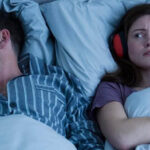
If your head starts aching only after the white-noise machine has been running, the sound may be involved—but white noise itself may not be the whole problem. A few simple changes to the volume, distance, listening time, and type of noise can show you what is actually setting it off.
1. If White Noise Gives You a Headache, What Should You Check First?
If white noise gives you a headache while you work, relax, or sleep, it is easy to assume that any white-noise sound will cause the same problem. Before giving it up completely, check whether the pain reliably changes when you alter one part of your setup.
Notice how soon the headache starts, whether it eases after the sound stops, and whether it also happens on quiet days or nights. A headache that repeatedly follows white-noise exposure and improves when you remove it gives you a much stronger clue than a single episode.
2. Does Turning Down the Volume Change What You Feel?
Keep the same white-noise track and speaker position, but lower the volume substantially while it is still loud enough to mask some background sound. If the headache fades at the lower setting, your usual volume may be the trigger rather than the fact that you are listening to white noise.
Do not wait for the sound to feel painfully loud before trying a quieter setting. A level that seems merely annoying or tiring can still become uncomfortable during a long listening session, especially if you are sensitive to continuous sound.
3. What Happens When the White-Noise Machine Is Farther Away?
A white-noise machine beside your pillow can sound much more intense than the same machine placed across the room. That makes moving the speaker farther from your head worth testing separately instead of relying only on the volume control.
Leave the track and volume unchanged and try the machine from farther away for a comparable amount of time. If it still masks enough background noise but your headache becomes less noticeable, having the machine too close may have been part of the problem.
4. Does the Hissing Quality Bother You Even at a Low Volume?
White noise has a broad, static-like hiss that can feel sharper than pink noise, brown noise, a fan, or steady rainfall. If lowering the volume does not help, the character of the sound itself may be what your ears or nervous system find uncomfortable.
Try another continuous sound at a similarly comfortable volume and for roughly the same amount of time. If the headache keeps returning with white noise but not with the softer alternatives, the hiss itself may be what bothers you.
5. Does Longer Exposure Make the Headache More Likely?
A sound that feels harmless for ten minutes may become irritating after several hours, so listening time deserves its own test. This is especially relevant if you sleep with white noise all night or leave it running throughout an entire work session.
Compare a shorter session with your usual longer one while keeping the volume and distance similar. If headaches appear mainly after prolonged use, shortening the session may help more than repeatedly switching between different kinds of noise.
6. What If You Wake Up With a Headache After Sleeping With White Noise?
Waking with a headache after using white noise overnight can make the machine look like the obvious cause, but one morning is not enough to prove the connection. Morning headaches can have many causes, so compare nights with and without white noise rather than judging from a single night.
White noise becomes a more convincing trigger if you repeatedly wake with a headache after using it, feel better on nights without it, and improve after lowering the volume or moving the machine farther away. If the headaches continue just as often in silence, the white-noise machine may not be the main cause.
7. Are Other Everyday Sounds Starting to Bother You Too?
If other everyday sounds such as conversation, traffic, television, or clattering dishes also feel unusually unpleasant when the headache appears, white noise may be only one of several sound triggers. This pattern matters more than whether one particular white-noise track contains a frequency you dislike.
Pay particular attention when sound sensitivity appears with nausea, light sensitivity, throbbing pain, or a strong urge to find somewhere quiet. For someone who is prone to migraine, white noise may be one of several sounds that can set off or worsen an attack rather than a unique problem on its own.
8. When Should You Stop Testing the White-Noise Setup?
Changing the volume, distance, sound type, and listening time is useful when headaches are mild and clearly connected to white-noise use. It becomes less useful when headaches keep occurring without the sound, become more frequent, or continue getting worse despite those changes.
Seek prompt medical evaluation for a new severe headache or one accompanied by weakness, confusion, trouble speaking, major vision changes, fainting, fever with neck stiffness, or other sudden neurological symptoms. Do not assume white noise explains those symptoms simply because it happened to be playing at the time.
9. Main Point
- White noise can be a headache trigger, but a repeatable pattern matters more than one episode.
- Test the volume, speaker distance, listening time, and type of sound separately to see what actually changes the headache.
- If low-volume white noise still bothers you, compare it with pink noise, brown noise, a fan, or another steadier sound.
- Headaches that also occur in silence or sensitivity to many everyday sounds suggest that the white-noise setup may not be the whole explanation.
- Severe, worsening, or neurologically unusual headaches should be medically evaluated rather than repeatedly tested with sound.