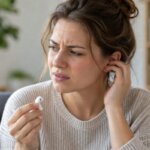
If you’re wondering why your voice sounds louder with earplugs in, the sudden booming or hollow sound can be unsettling. This usually happens because of the occlusion effect, but whether your hearing returns to normal after removing the earplugs can help you tell if something else needs attention.
1. Why Does Your Voice Suddenly Sound So Loud With Earplugs In?
If your own voice suddenly booms inside your head when you put in earplugs, it can feel alarming, but it does not automatically mean your hearing is damaged. The most important clue is whether your voice sounds normal again when you remove the earplugs or continues to sound unusually loud afterward.
Notice whether the booming begins immediately after inserting the plugs, affects one or both ears, and disappears once your ears are uncovered. If you also experience persistent muffled hearing, ringing, ear pain, or dizziness, those symptoms deserve attention because they may indicate something beyond the normal effect of wearing earplugs.
2. What Happens Inside Your Ears When You Speak With Earplugs?
Your voice may sound normal without earplugs but suddenly seem much deeper or louder as soon as you put them in. When you speak, vibrations travel through your skull and surrounding tissues to your inner ears through bone conduction, while a sealed ear canal prevents some low-frequency sound energy from escaping, creating the occlusion effect.
Some people even hear their own voice echoing inside their head while wearing earplugs, especially when speaking in a quiet room. Because the plugs also reduce surrounding noise, internally generated sounds become more noticeable, making ordinary speech, humming, or chewing seem unusually loud even though other people do not hear your voice getting louder.
3. How Can You Tell Whether the Booming Is Normal?
Take your earplugs out somewhere quiet and notice whether your voice immediately sounds normal again. If your voice sounds normal again as soon as you remove the earplugs, and you can hear ordinary conversations without difficulty, the change is consistent with a temporary occlusion effect rather than a new hearing problem.
For example, foam earplugs might make your voice sound booming while you study, but the sensation should disappear when you remove them, even if one ear initially seemed louder than the other. If the unusual sound persists, you notice a new difference in hearing between your ears, or everyday conversations remain difficult to hear, an ear examination or hearing test may be appropriate.
4. Why Might Foam or Silicone Earplugs Make the Effect Worse?
If foam earplugs make your voice sound as though you’re talking underwater, the way they seal your ears may explain why. Foam and reusable silicone earplugs can both produce a hollow or muffled sensation, but their shape, insertion depth, and fit affect how much booming you hear, while certain properly fitted deeper-sealing designs may reduce it.
If hearing yourself talk through earplugs becomes distracting, check that they fit correctly and consider filtered or professionally fitted designs that may reduce the occlusion effect. Avoid forcing plugs deeper or loosening them in noisy environments just to make your voice sound natural, since improper insertion can cause discomfort or reduce the hearing protection you need.
If your ears also ache or feel tender after wearing plugs, read Ear Pain After Wearing Earplugs? 4 Clues Before You Use Them Again.
5. When Could a Loud or Hollow Voice Signal an Ear Problem?
If your voice still echoes after you take the earplugs out, the plugs may not be the whole explanation. Hearing your own voice or breathing unusually loudly without anything blocking your ears is sometimes called autophony, which can occur with certain ear conditions, including problems involving the Eustachian tube.
Persistent muffled hearing may also result from earwax buildup, middle-ear problems, or other conditions that require an examination to identify. If you repeatedly notice an unusual voice sound without earplugs, struggle to follow conversations, or develop ongoing tinnitus, arrange a medical assessment rather than assuming the sensation is harmless.
6. Which Hearing Symptoms Need Urgent Attention?
If your hearing suddenly becomes muffled or noticeably weaker, don’t assume it’s just the earplugs. Sudden hearing loss, especially in one ear, requires urgent same-day medical evaluation, even if your ear feels blocked or you suspect the change occurred because you were wearing earplugs.
Severe spinning dizziness accompanied by a new hearing change also needs urgent assessment, while significant ear pain, drainage, or persistent pressure should be medically evaluated. Ordinary earplug-related booming should disappear when the plugs are removed, so a sudden or lasting change in your actual hearing should not be dismissed as the occlusion effect.
7. What Matters Most
- A louder voice with earplugs is usually normal. The occlusion effect makes internally generated, low-frequency sounds more noticeable when your ear canals are sealed.
- The timing provides the clearest clue. Booming that begins when you insert earplugs and disappears when you remove them is consistent with a normal occlusion effect.
- Earplug fit can change the sensation. Foam, silicone, and filtered earplugs may produce different amounts of booming depending on their design, seal, and insertion depth.
- Persistent symptoms deserve attention. Unusual voice sounds without earplugs, ongoing muffled hearing, ringing, pain, or dizziness may justify an ear examination or hearing test.
- Sudden hearing loss needs urgent care. Do not assume a sudden reduction in hearing is simply another earplug effect, even if your ear feels blocked.