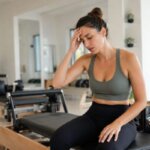
Feel shaky after Pilates can be confusing because the movements often look controlled, slow, and low-impact from the outside. The useful way to judge it is to separate normal stabilizer-muscle fatigue from breath-holding, reformer resistance, form breakdown, low fuel, and warning signs that mean you should stop.
1. Feel Shaky After Pilates and Where the Shake Begins
Feeling shaky after Pilates usually makes more sense when you first ask where the shaking started. If your core, inner thighs, glutes, arms, or legs began trembling during a specific movement, the cause is often local muscle fatigue from controlled tension. Pilates can make small stabilizing muscles work hard because the goal is not just to move, but to move slowly, precisely, and with control.
If the shaky feeling starts after class, the judgment changes. Whole-body shakiness after Pilates may involve low fuel, dehydration, overexertion, nervous-system arousal, or breathing that stayed too restricted during the session. Local shaking during a difficult move is usually a control-and-fatigue issue, while shaky weakness after class needs a wider recovery check.
2. When Reformer Pilates Makes Small Muscles Tremble
Shaky after reformer Pilates is especially common because the spring resistance can expose small muscles that do not usually work that precisely. A movement may not feel heavy in the same way as weight training, but your body still has to control the carriage, resist wobbling, keep alignment, and maintain tension through a long range of motion. That combination can make your legs, glutes, core, or arms shake even when the class does not feel intense at first.
This is also why many people wonder whether it is normal to shake during Pilates, especially when the movement looks slow but the body feels unstable. This kind of Pilates shaking is usually normal when it stays tied to the muscles doing the work. Your inner thighs may tremble during footwork, your glutes may shake during bridges, or your core may quiver during a slow hold.
If you can still breathe, keep alignment, and follow the instructor’s cue, it usually means the muscle is reaching its current endurance limit. If the shake makes the carriage jerk, your hips twist, or your posture collapse, the move needs to be adjusted before it becomes a compensation pattern.
3. When Breath-Holding Turns Effort Into Shakiness
Pilates can make you shaky when you unknowingly hold your breath during difficult moves. This often happens during planks, teaser variations, leg circles, bridges, reformer work, or any movement where you are trying hard to keep your body still. The shake may feel stronger because your muscles are working while your breathing is restricted, which makes the effort feel more urgent than it needs to be.
A useful check is whether the tremble softens when you exhale and reduce the range slightly. If steady breathing makes the movement feel more controllable, the issue is not just weak muscles; it is effort plus bracing. In Pilates, forcing a shape while holding your breath usually creates more tension than control.
A smaller movement with steady breathing is more useful than a larger movement that makes your body shake and brace. The breath test helps you tell the difference between useful effort and a movement that is starting to overwhelm control.
If the same tremble appears in yoga poses or breathwork, compare it with Feel Shaky After Yoga: Muscle Fatigue, Breathing, or a Sign to Stop?
4. When Form Control Matters More Than Pushing Through
Shaking during Pilates is not automatically a sign that you should quit the exercise. A mild tremble can be useful feedback that your body is working near its current control limit. The problem starts when the shake pulls you out of alignment, makes your hips twist, causes your back to arch, or turns a controlled movement into a fight to survive the position.
This is where Pilates is different from simply pushing through a hard workout. The goal is not to hold the hardest version while your form collapses, so a modification, lighter spring, smaller range, bent-knee version, shorter hold, or slower tempo is often the better choice. The better choice is the version you can control without losing breath, balance, or joint position.
5. When After-Class Shaking Points Beyond Pilates Technique
If the shaky feeling continues after Pilates and spreads through your whole body, look beyond the exercise itself. This pattern is more likely when you took class on an empty stomach, slept poorly, drank coffee but did not eat, stayed tense through the session, or pushed harder than your current recovery level. It may feel less like one tired muscle and more like weak legs, shaky hands, lightheadedness, hunger, nausea, or a hollow feeling.
Hydration and heat can also matter, especially in a warm studio or a faster class with little rest. Pilates may not always look sweaty, but long holds, repeated core work, and reformer resistance can still create a real recovery demand. If food, water, cooling down, and sitting quietly improve the shakiness, the pattern fits recovery stress more than a dangerous Pilates-specific problem.
If the shakiness feels whole-body, weak, or food-related after class, judge the broader pattern here: Feel Shaky After Exercise: Blood Sugar, Adrenaline, or a Sign to Stop?
6. What to Change in Your Next Pilates Class
The next class should help you test the pattern, not repeat the same overload. Start by reducing one variable: choose a beginner version, use lighter spring resistance, shorten the hold, move through a smaller range, or take the modification sooner. If the shaking becomes milder and your control improves, the original version was simply too demanding for your current endurance and coordination.
Also check your setup before class. Eat a light snack if you often feel weak afterward, drink water before longer sessions, avoid rushing into advanced reformer moves, and tell the instructor if you lose control during specific exercises. Pilates progress usually comes from cleaner control over time, not from shaking harder every class.
If the same shake appears only during one move, adjust that move first. If it appears across the whole class, adjust fuel, hydration, breathing, and class intensity before deciding that Pilates is simply not right for you.
7. When Shakiness Is a Stop Sign
You should stop the movement when shaking changes from a manageable tremble into loss of control. That means your balance starts to fail, your breath gets stuck, your joints feel strained, your back or neck takes over, or you cannot safely exit the position. In that moment, continuing the exercise does not build better Pilates control; it teaches your body to compensate.
Stop the class or get help if shakiness comes with symptoms that do not fit ordinary muscle fatigue:
- Dizziness, faintness, or feeling like you may pass out
- Nausea, vomiting, cold sweat, or sudden weakness
- Chest discomfort or unusual shortness of breath
- Confusion, numbness, tingling, or loss of coordination
- Sharp joint pain, severe back pain, or pain that changes your movement
- Shaking that does not improve after rest, water, and food
8. The Bottom Line
Feeling shaky after Pilates is usually normal when it stays local, mild, and linked to controlled movements, reformer resistance, small stabilizer muscles, or a position that challenges your current endurance.
- Normal: core, legs, arms, or glutes shake during a hard but controlled movement
- Adjust the move: shaking increases when your range, spring resistance, or hold time is too much
- Check breathing: the tremble gets worse when you brace or hold your breath
- Check recovery: whole-body shakiness after class points more toward fuel, hydration, or overexertion
- Stop: shakiness comes with dizziness, nausea, faintness, sharp pain, chest discomfort, confusion, or loss of control